Revisiting “Nosferatu” (1922)
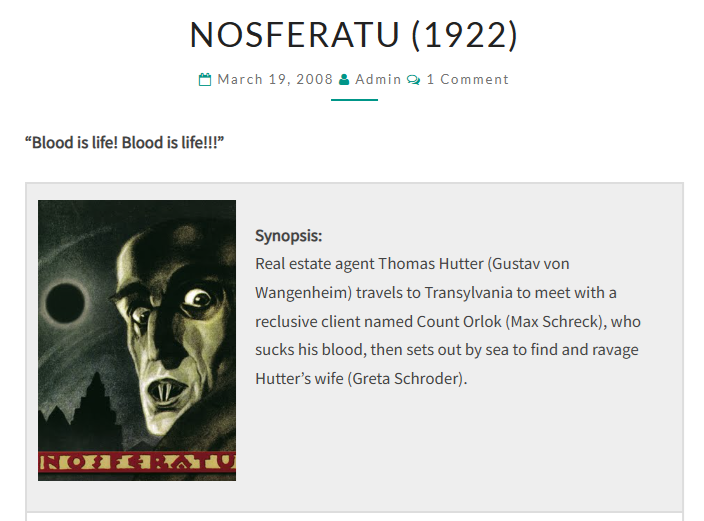
Revisiting “Nosferatu” (1922)

I originally reviewed F.W. Murnau’s silent horror classic Nosferatu (1922) back in March 2008 — two years after starting this blog site, when I was three months pregnant with my oldest child. That daughter is now an 18-year-old adult taking a college class all about vampires (woot!). She asked me today if I would watch this movie with her, and I jumped at the chance.

(Spoiler alert: She watched Dracula [1931] last week with her class, and had to write about which adaptation she preferred; she chose that one over this.)

I first saw Nosferatu (1922) many, many years ago — sometime in the 1990s, most likely taped off of AMC (prior to the emergence of TCM), or perhaps I tried to go out and see it on a big screen somewhere. I can’t recall. At that time, I was frantically busy watching as many of Peary’s GFTFF titles as I could, trying to absorb the enormity of film history in a condensed and obsessive manner. I had convinced myself I couldn’t — or shouldn’t — “legitimately” write about movies until I was much more familiar with them vis-a-vis the arc of cinematic history; hence, waiting until 2006 (at the age of 32) to finally start this site.

Was that wise, or necessary? I’m not sure. But once I did jump into this project, I was committed to finally start recording all my reactions, and to engage in ongoing, explicit sensemaking-through-writing about the massive world of Cinema.

To that end, I’ve always appreciated the concept of recursivity in film viewing — that is, returning to a movie numerous times, and reflecting on how your views on it have changed alongside your own development. Peary seems to be a fan of this, too: his books are based (in part) on the idea of not only watching what’s new-and-exciting but revisiting older movies again and again — sometimes obsessively and repeatedly as a cult favorite, sometimes out of curiosity for how a childhood favorite has held up, sometimes because a film simply keeps showing up on television… My distinction here between “recursivity” and “rewatching,” by the way, is that it’s assumed with the former you won’t simply see and experience the same feelings each time; your response may shift. I’ve never had a great memory for details of movies, thus making it incredibly easy to re-enjoy something (or not) time and again; I think my novelty-seeking brain is too interested in seeking out new things to have space to hold on firmly to the old. My “poor” memory is actually one part of why I started this project: to archive my thoughts before they disappear, and have access to an entire trove of my own documented responses.

Recursivity can be generational as well. As I’ve discussed before on this site, how we view (and re-view) films has continued to evolve in ways that each previous generation may have found unfathomable — and yet, here we are, with my 18-year-old Gen Z daughter and her peers emerging as enthusiastic cinephiles (hurra!); maybe there will be a renewed interest in movie sites like this one. There are certainly many more video reviews now available on YouTube, which I enjoy checking out; I tried this myself and simply found it too time-consuming. My 16-year-old Gen Z son is fascinated by certain movies — Hundreds of Beavers (2022) is a title he insisted on going to see with us in the theater — and he’s almost always up to going to see a random classic film with me; for instance, we saw Raw Deal (1948) when it rolled into town as part of an annual Film Noir festival, and shook hands with host Eddie Mueller. My youngest (13-year-old, cusp Gen Z) isn’t (yet) a movie fan; she is obsessed with K-Pop, and that’s what we share during our time together.

Back to Nosferatu, when I re-read my original review, I noticed I hadn’t included too much detail, other than basics described by Peary in his GFTFF review (and now widely known about its origin story) — i.e., the film nearly being destroyed into oblivion after a successful law suit by Bram Stoker’s widow. This third visit allowed me to reflect on what it’s like watching a film over 100 years old, with all its actors, even the youngest, long gone.
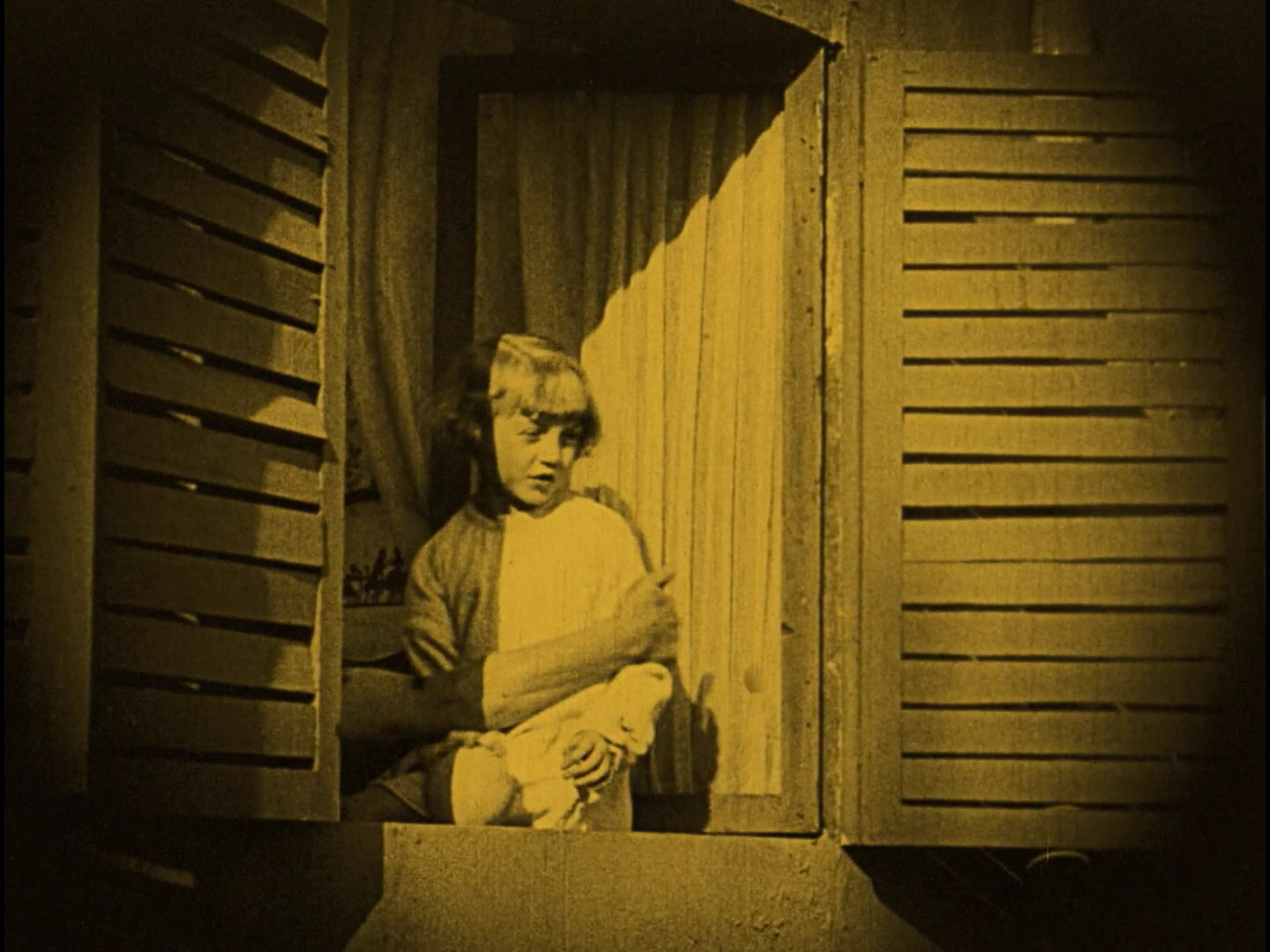
Knowing it celebrated its centenary when COVID-19 was still raging in 2022 made the plague-driven plot elements especially eerie.
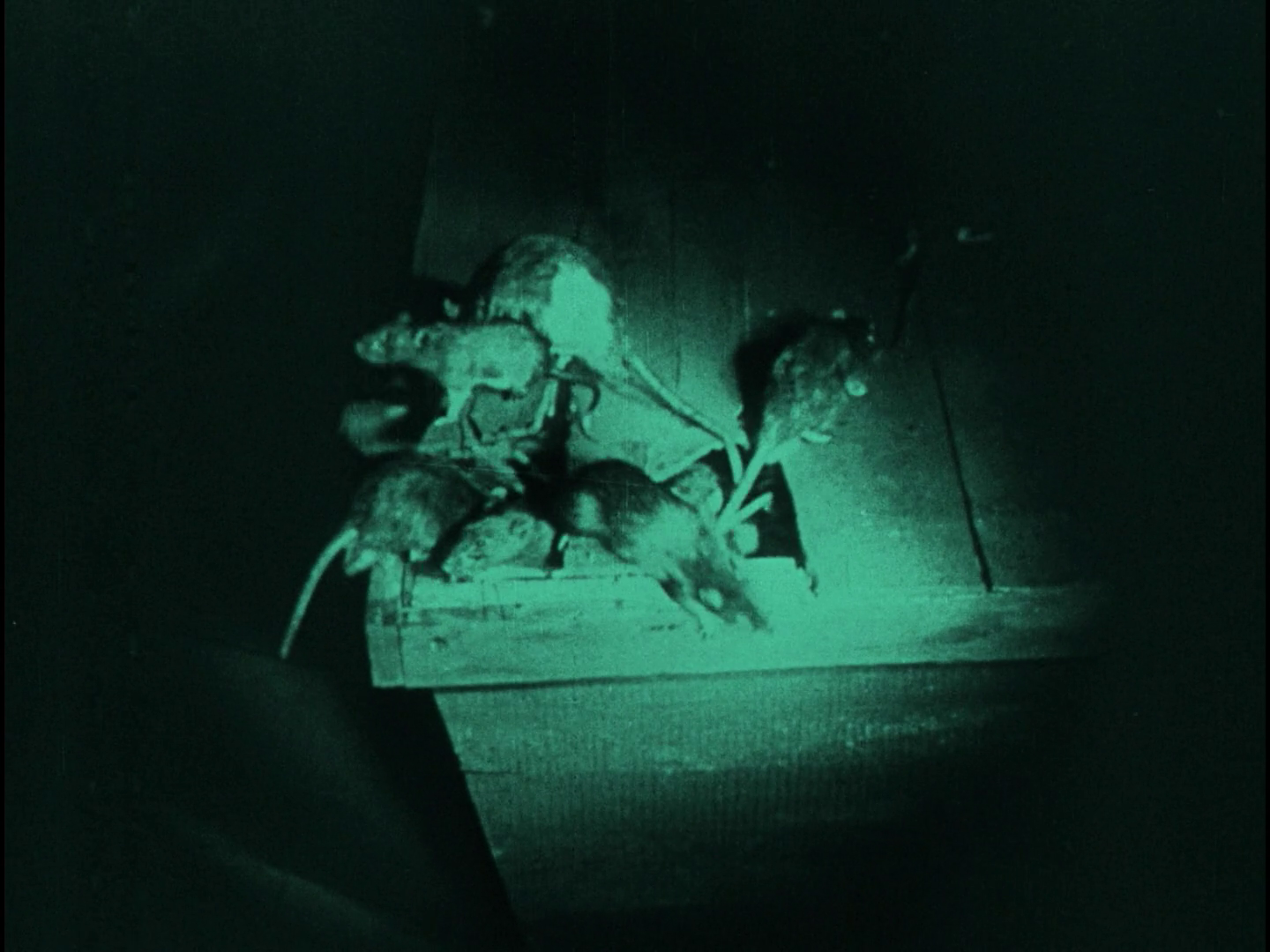
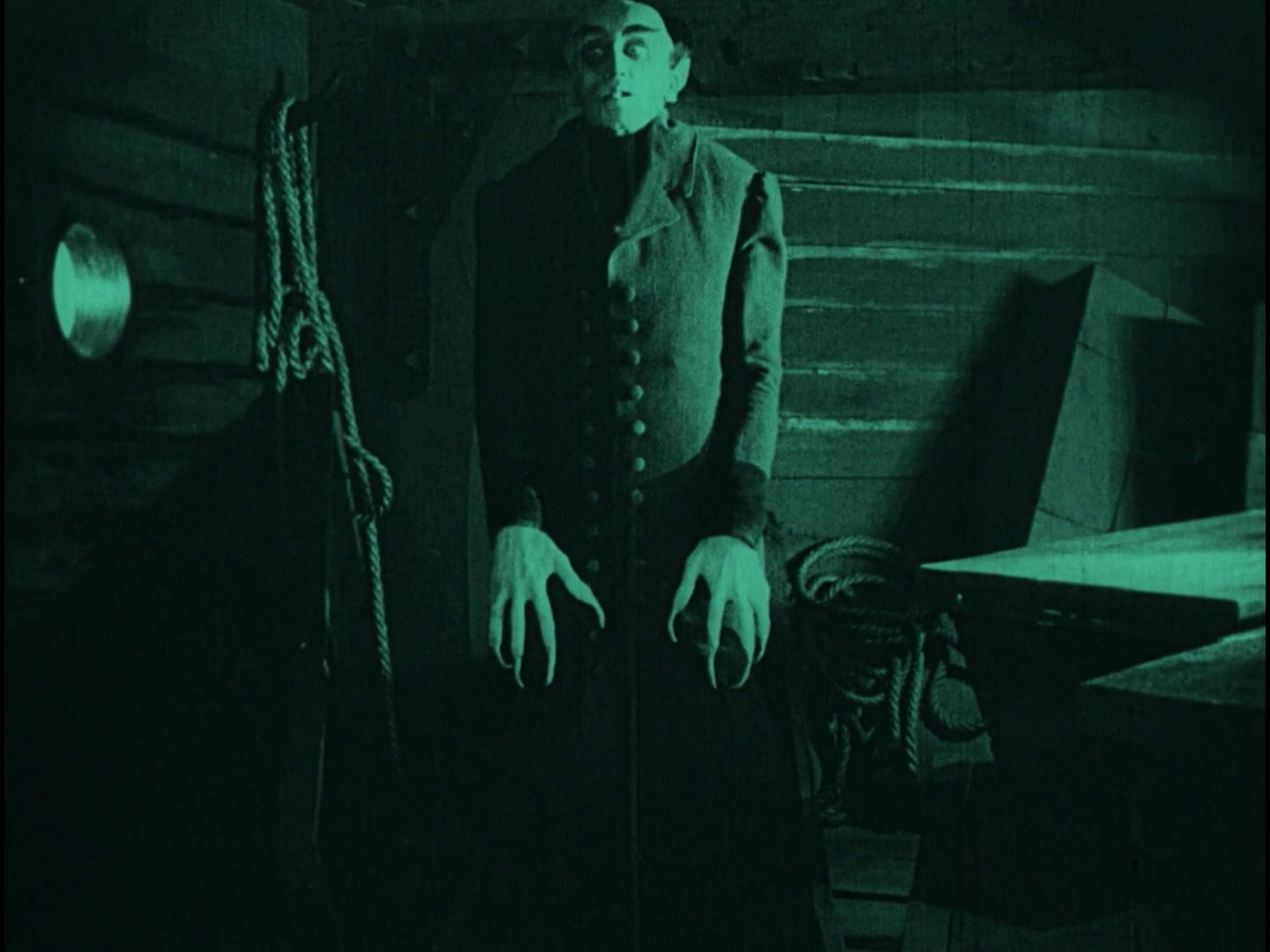
I talked out loud with my daughter while watching, having a bit of fun with elements of silent films that are undeniably archaic and often laughable — like overly expressive acting styles (though she added that today’s actors could use a bit more of this in their approach!).
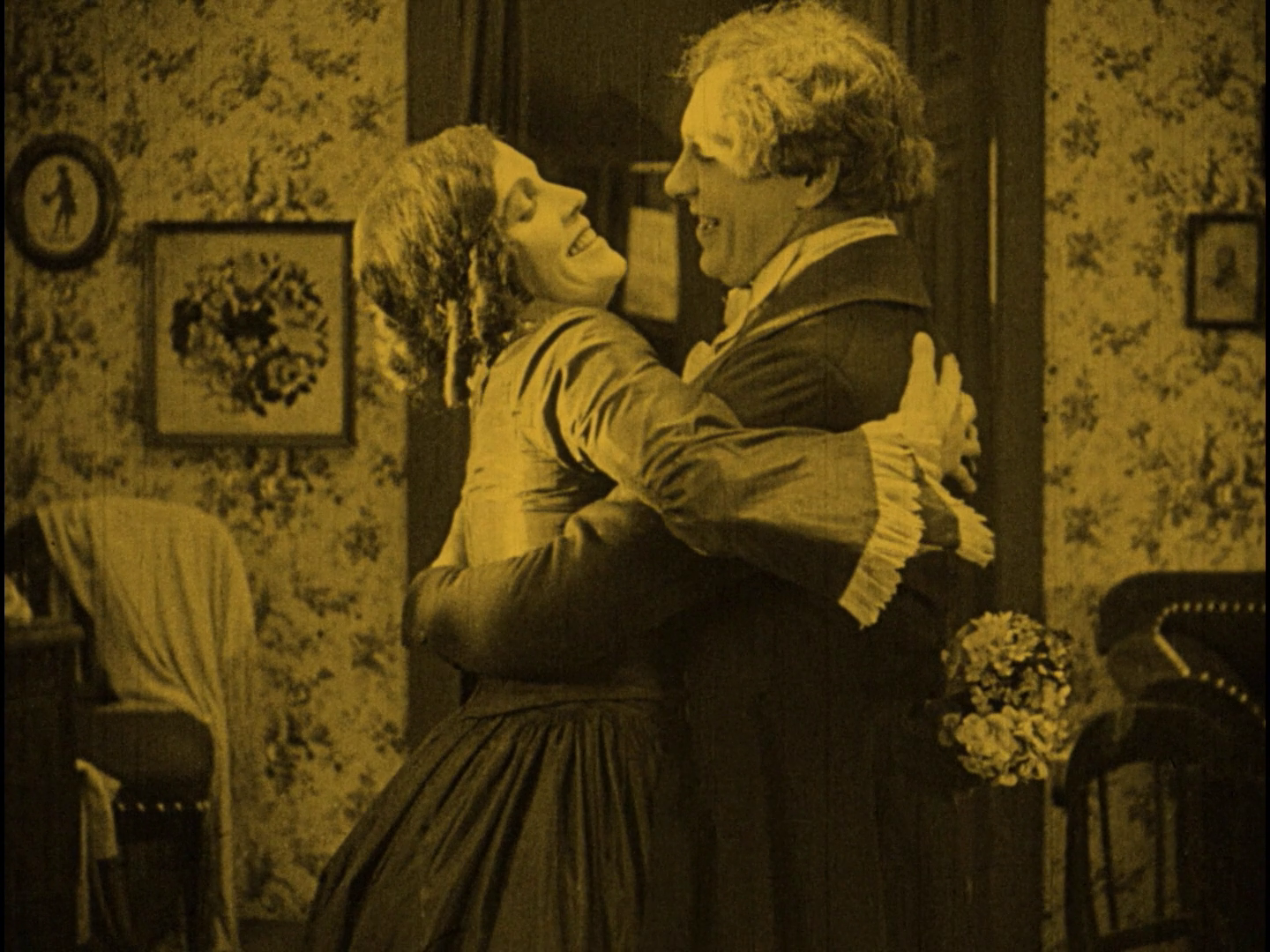
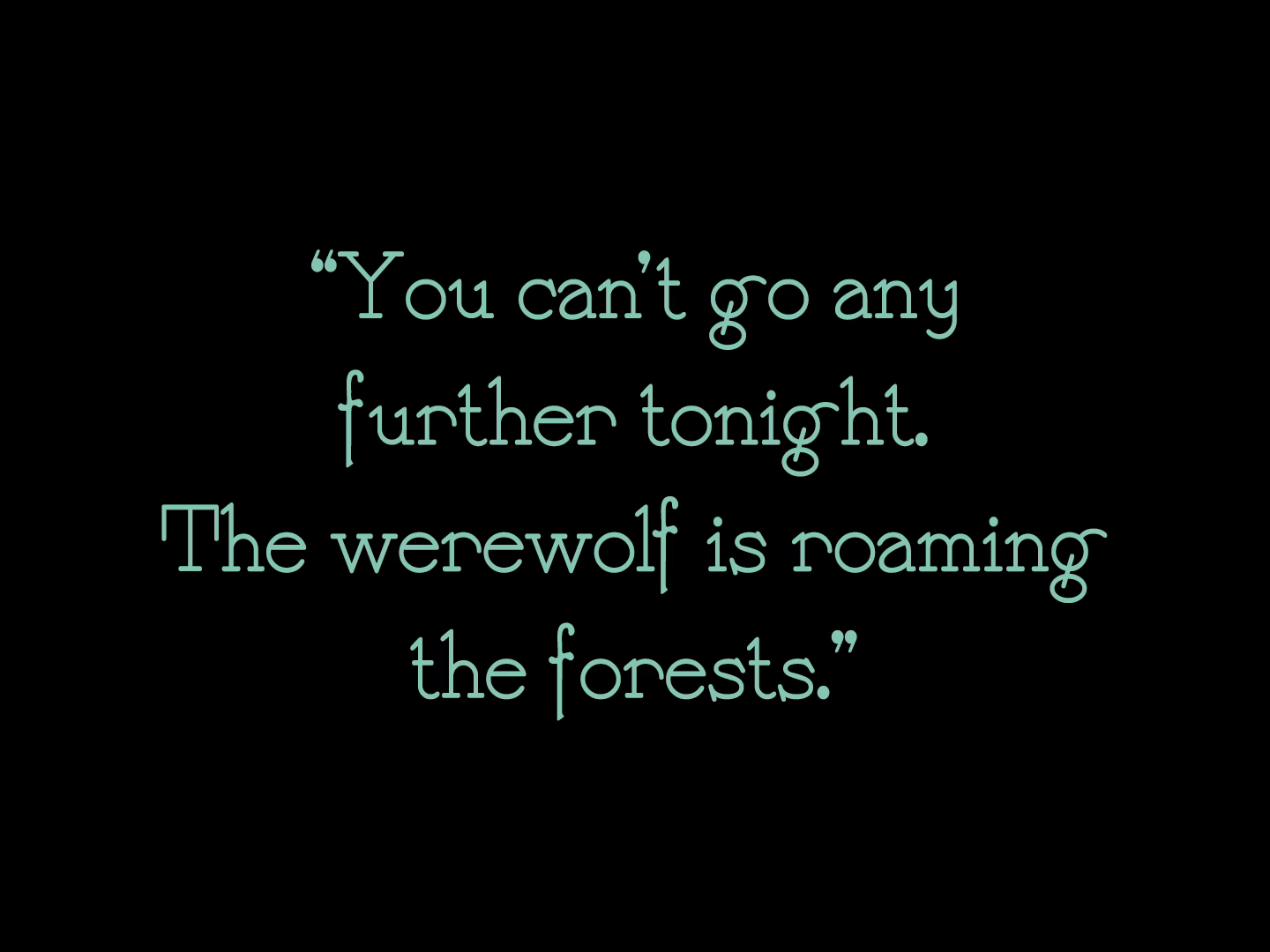
She commented on the color shifts, and how the directing team clearly struggled to depict night-time (they simply used blue). We laughed when seeing the striped hyena posing as a wolf after Hutter is warned at the inn about the local “werewolf”.

She and I both lamented the clear anti-semitic overtones in Schreck’s prosthetic head-mask. (Yes, they are there.)
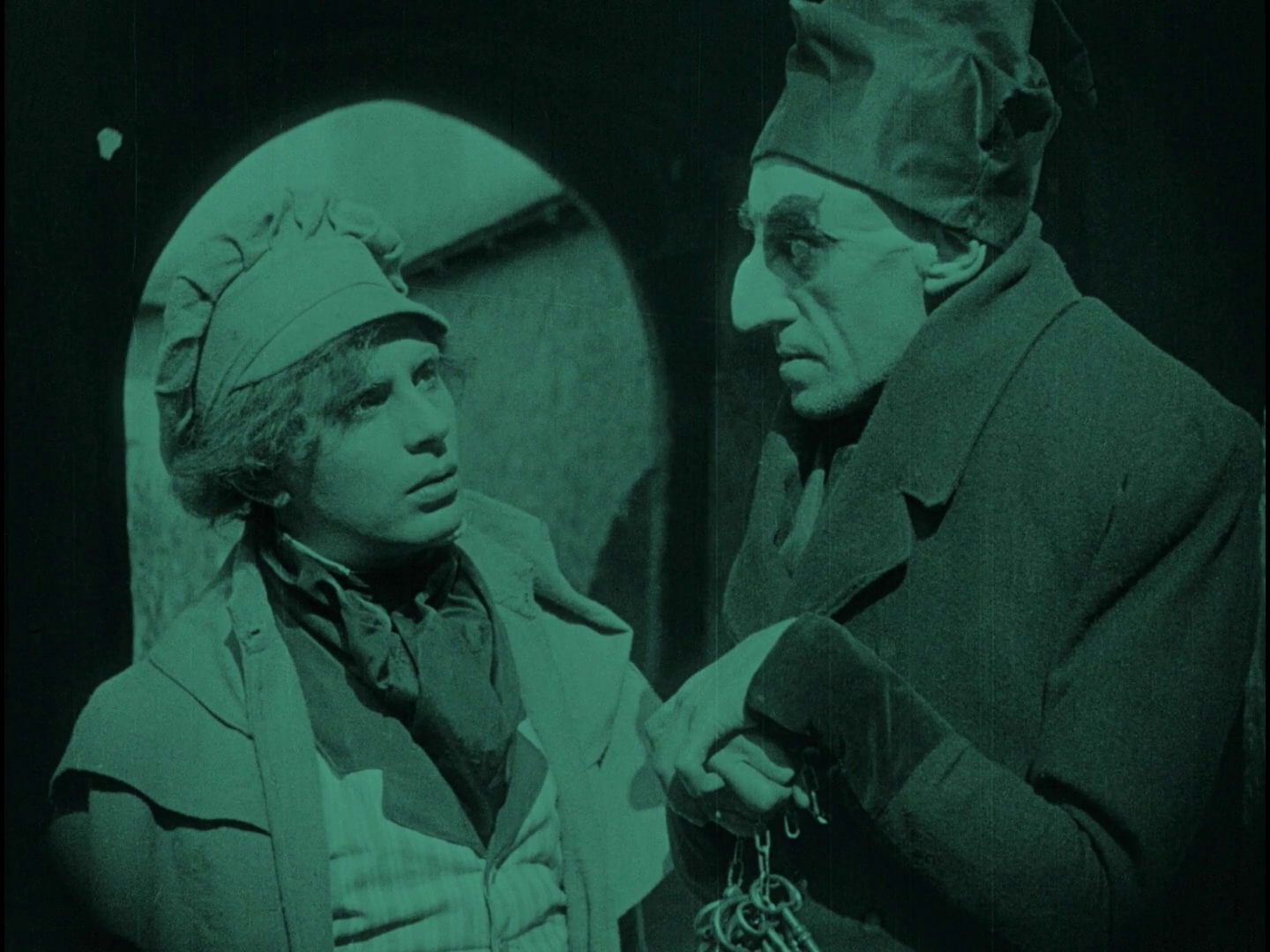
We struggled to discern some of the letters on the original title cards (specifically the capital H):

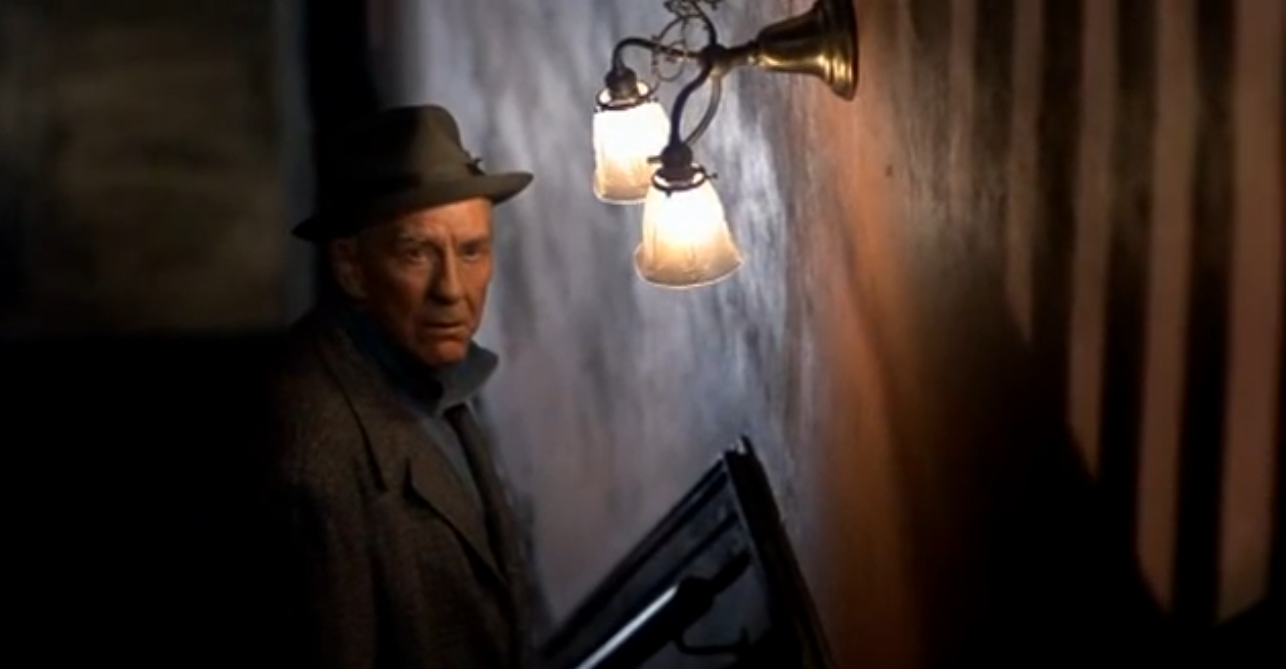
… and we oohed and aahed at the film’s most iconic images — this is the one that got her: “Okay, that’s cool” she said.
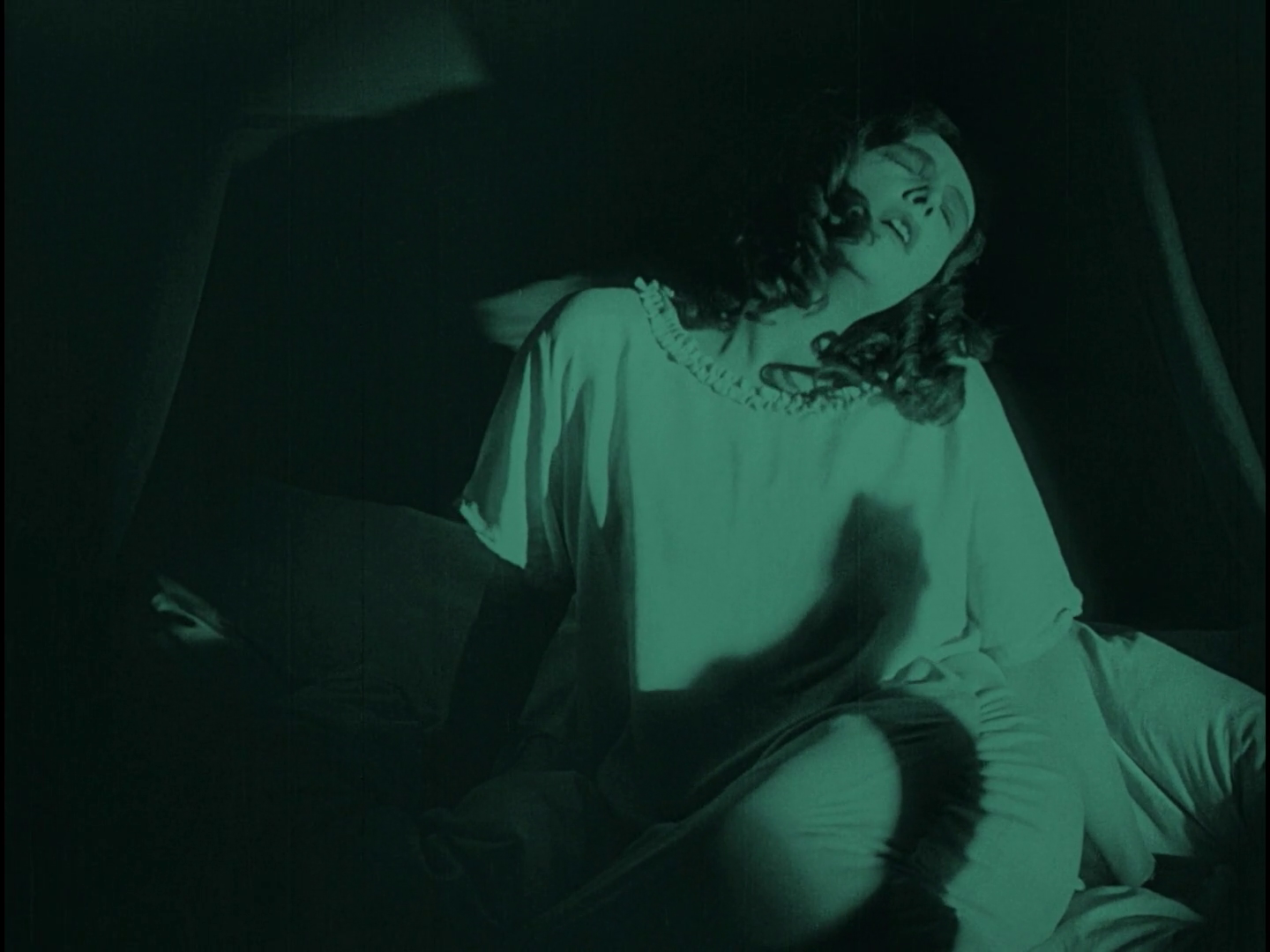
She talked quite a bit about narrative elements which differed from the novel, which I haven’t read since — well, since I was roughly her age; she pointed out, for instance, that Hutter “should” have been given a cross by the innskeeper to help him ward off Count Orlock.
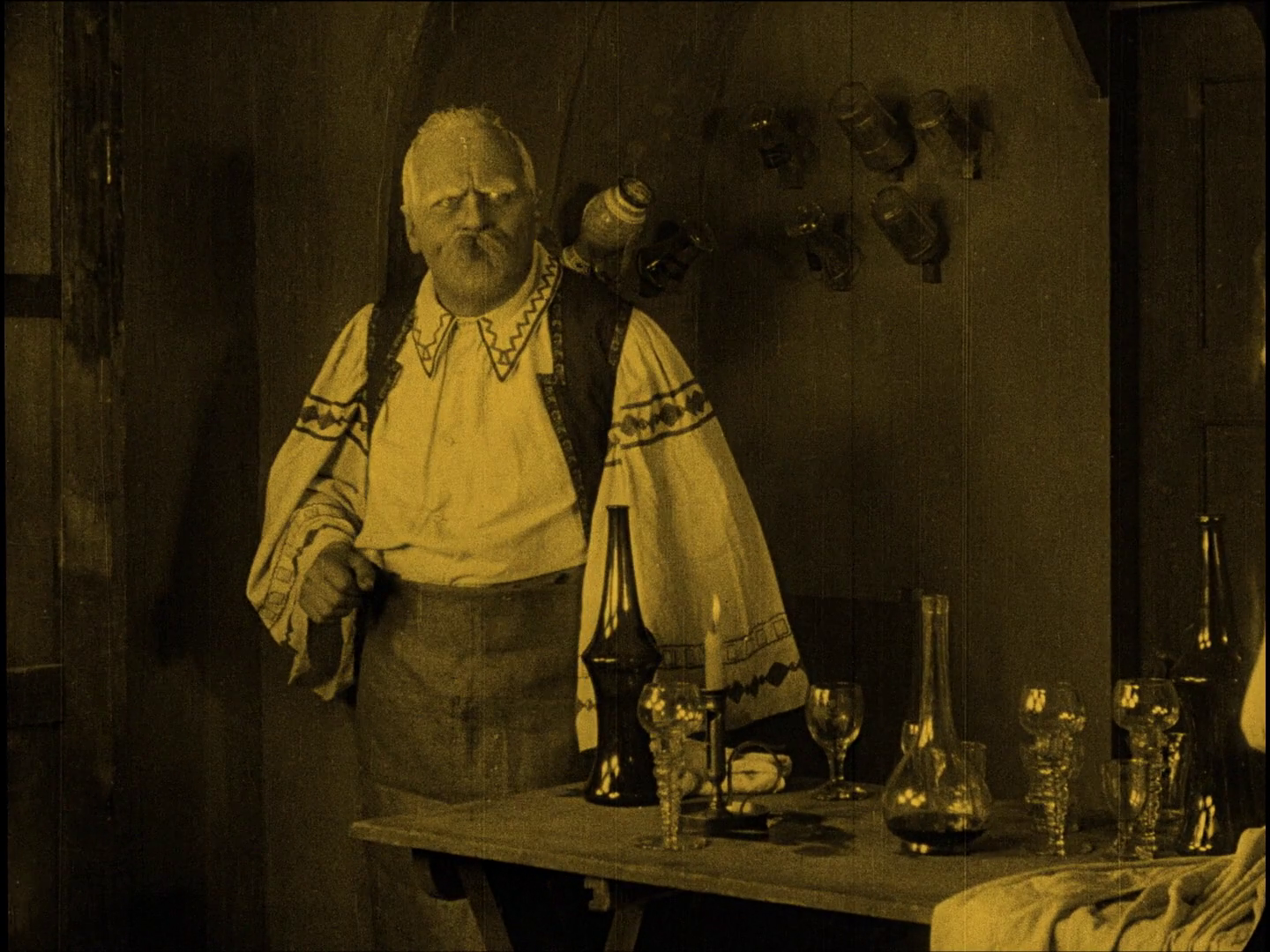
She lamented the sacrifice of Hutter’s wife at the end, asking if I’d heard the term “fridging” — I hadn’t.

A closing side note: Though I try to keep up somewhat with newer cinematic releases (this is part of why I occasionally disappear from here — I’m busy with current titles), I hadn’t realized that Nosferatu (2024) was recently remade yet again, which surely has brought younger audiences back to this earlier version. In a lovely instance of recursivity, the cast includes Willem Dafoe, who played actor Max Schreck in Shadow of the Vampire (2000), itself a “meta-film” about Nosferatu.

Long live vampires — ha, bad pun. Seriously, though, they’re as popular as ever; here is one Letterboxd user’s chronological list of their presence in films. (Letterboxd is the latest film fanatics’ online gathering place.)

Speaking of which – long live obsessive film fanatics! We are here to stay.
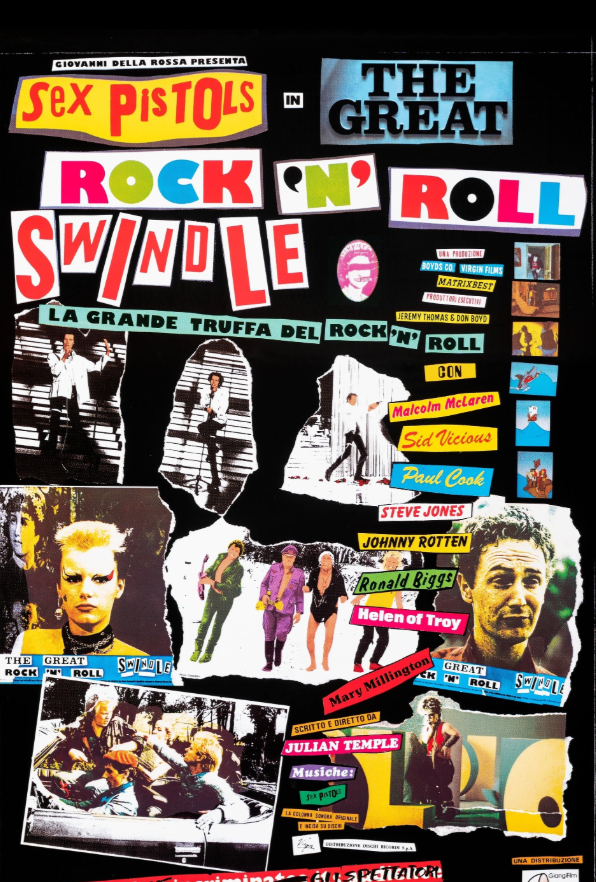
Great Rock ‘n Roll Swindle, The (1980)

Great Rock ‘n Roll Swindle, The (1980)

“With the lineup complete, we immediately set about putting our plan into effect, to swindle our way to the top of the rock n roll industry.”

Synopsis:
Sex Pistols manager Malcolm McLaren explains how the former punk rock band’s creation was all a scam to earn money, offering up the ten tips for financial success he followed.

Genres, Themes, Actors, and Directors:

  • Mockumentaries
  • Punk Rock

Review:
Julien Temple wrote and directed this mockumentary about the rise and fall of the Sex Pistols (already dissolved by the time of the film’s release) according to its managing director, Malcolm McLaren. Johnny Rotten notoriously wanted nothing to do with the film, while the other band members — Sid Vicious, Steve Jones, and Paul Cook — played smaller roles.

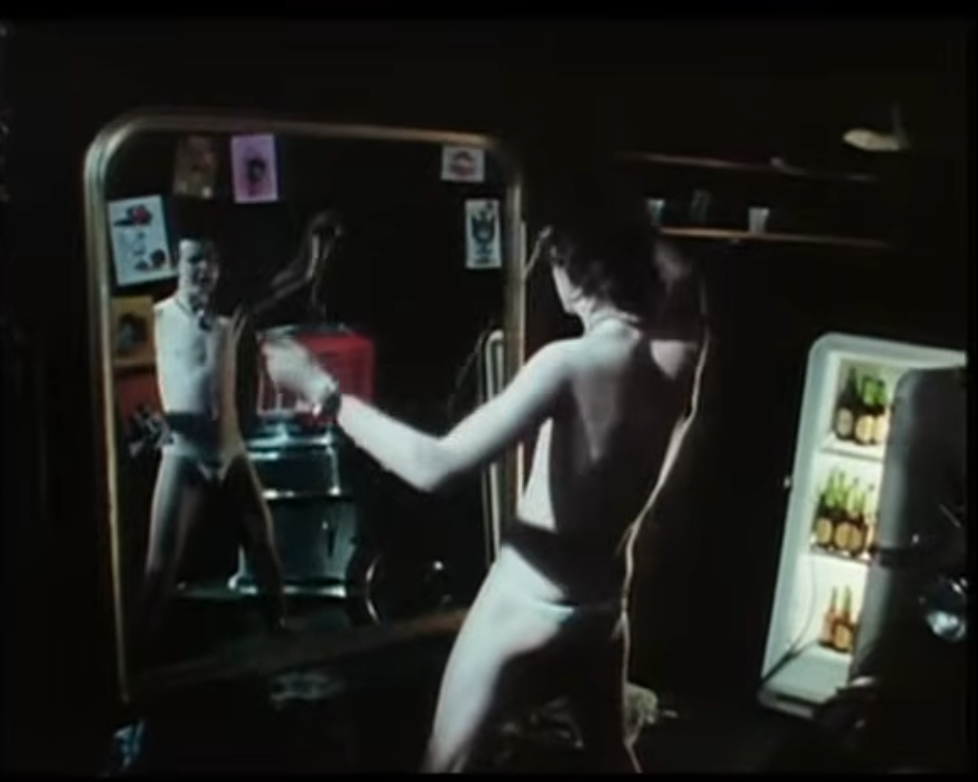
Truly nothing is sacred here, as one might expect in a satirical look at such an anarchist form of expression; by the end of the first 10 1/2 minutes, the title card has been assembled by a punk rock midget on skates (Helen Wellington-Lloyd):


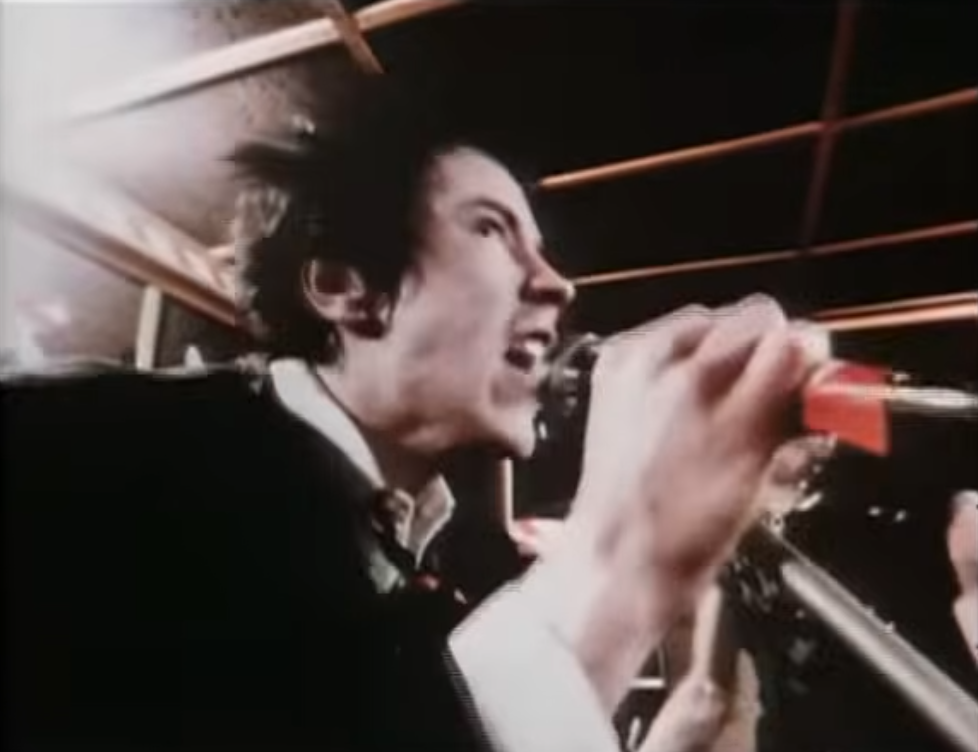
… and the pacing never slows after this. We see a wide variety of (often non-sensical) sequences intermingled with the band performing some of their hit songs, including Sid Vicious’s version of “My Way”.

For the record, here are the “10 lessons” espoused by McLaren:

  • 1) “Make the band.” Find four kids who hate each other and can’t actually play.
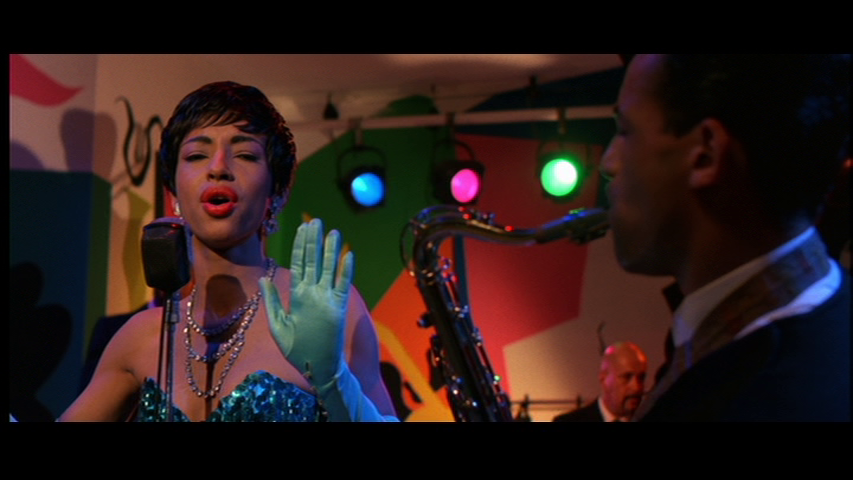
  • 2) Make the name known, but keep the band out of normal rock venues, instead booking them into strip clubs, prisons and fashionable parties. Put people in the crowd who will cause trouble and keep the press curious, and focus on fans dressing up rather than what the band is actually playing.
  • 3) “How to sell the swindle.” Hire a lawyer who cares about money, get different labels bidding on the band, and be as obstructive as possible.
  • 4) Use outrage to foment hatred and press.
  • 5) “How to steal as much money as quickly as possible from the record company of your choice.” Get dropped fast (using the band’s misbehavior as an excuse) but keep the money.
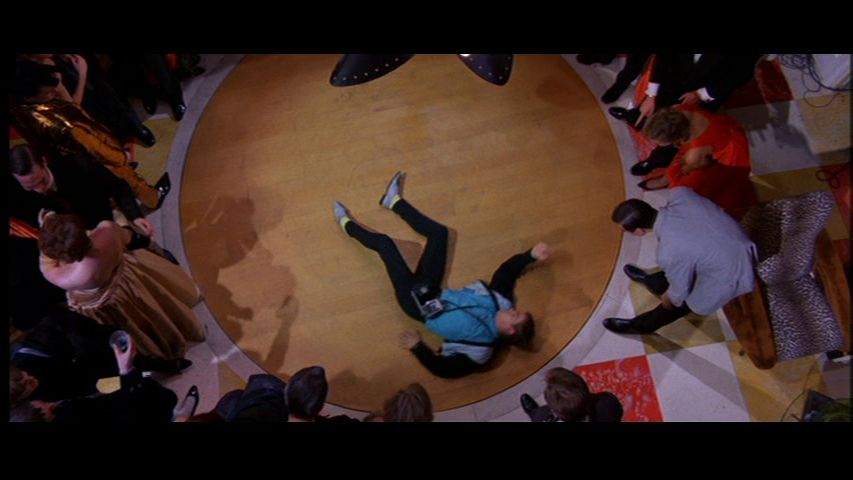
  • 6) “How to become the world’s greatest tourist attraction.” Latch on to a current event (like the Queen’s Jubilee).
  • 7) “Cultivate hatred, it is your greatest asset.” This can include booking a tour that no one can get to, spreading false rumors, and never letting the press know if the band can actually play.
  • 8) “How to diversity your business.” Four musicians who can’t play are also “four actors that can’t act,” so come up with a film but then make the script too disgusting for anyone to want to produce it.
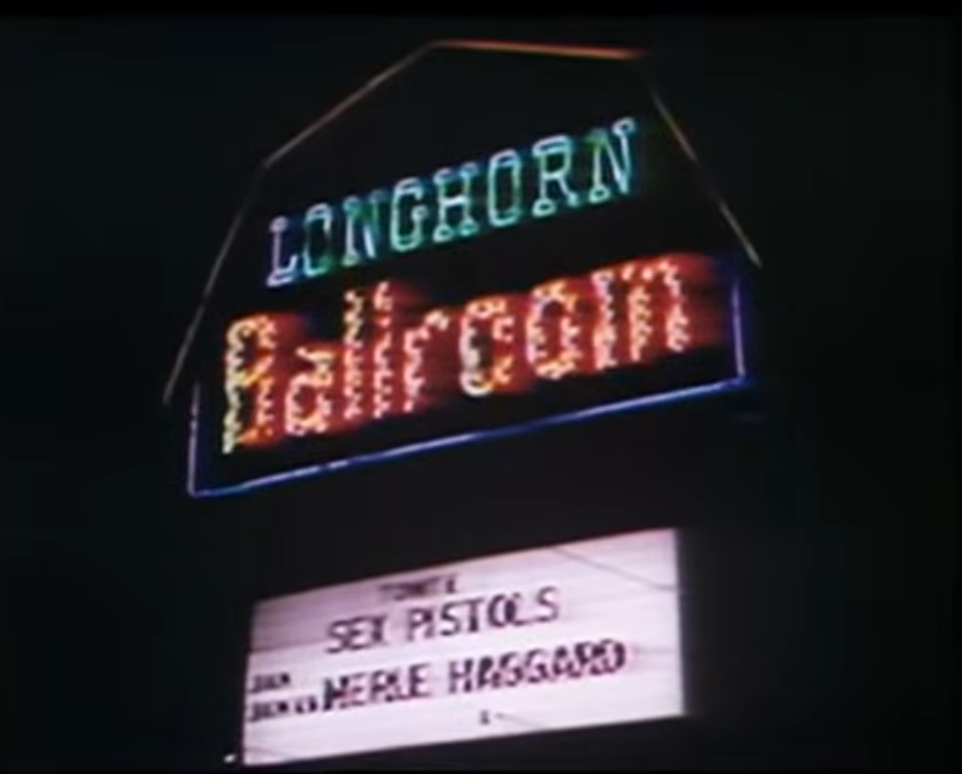
  • 9) Sign with an American label and play only in backwoods venues.
  • 10) Figure out a way to get out of the “rock ‘n roll circus.”

My favorite sequence: the film crew visit a singing instructor who diplomatically explains how she tried to help Johnny Rotten, to no avail: “But supposing, just supposing, that he took, um, ‘Submission’ and he decided that he — he might sing that, and I’d say ‘Right, now I know where we are.’ And by the time I was ready, he would have changed key. No way, absolutely no way, could we pick up a note.”
Notable Performances, Qualities, and Moments:

  • Many bizarrely memorable moments
  • Creative animation sequences

Must See?
No, though it’s worth a look for its cult status.
Links:

Claudine (1974)

Claudine (1974)

“We got a real sweet project going — so let’s be straight.”

Synopsis:
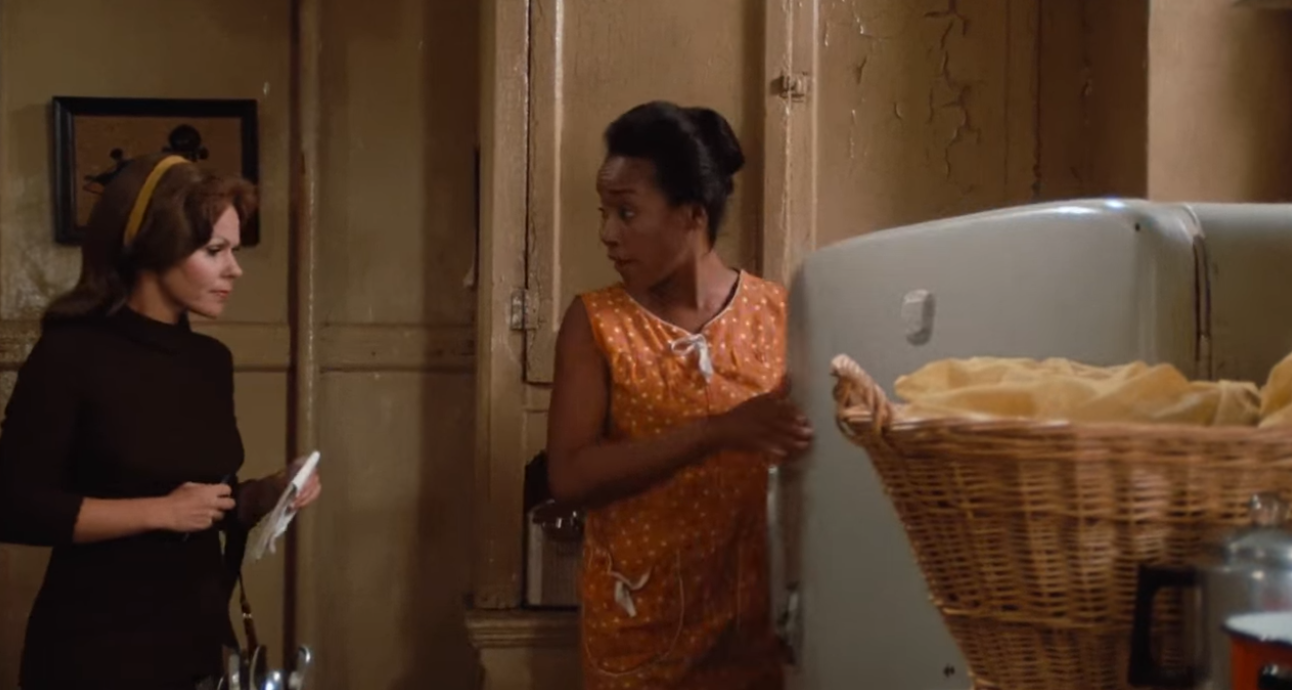
When a working single mother (Diahann Carroll) of six meets a charismatic garbage collector (James Earl Jones) and starts dating him, the couple immediately face issues related to welfare, parenting, and survival.

Genres, Themes, Actors, and Directors:

  • African-Americans
  • Romantic Comedy
  • Single Mothers
  • Survival

Review:
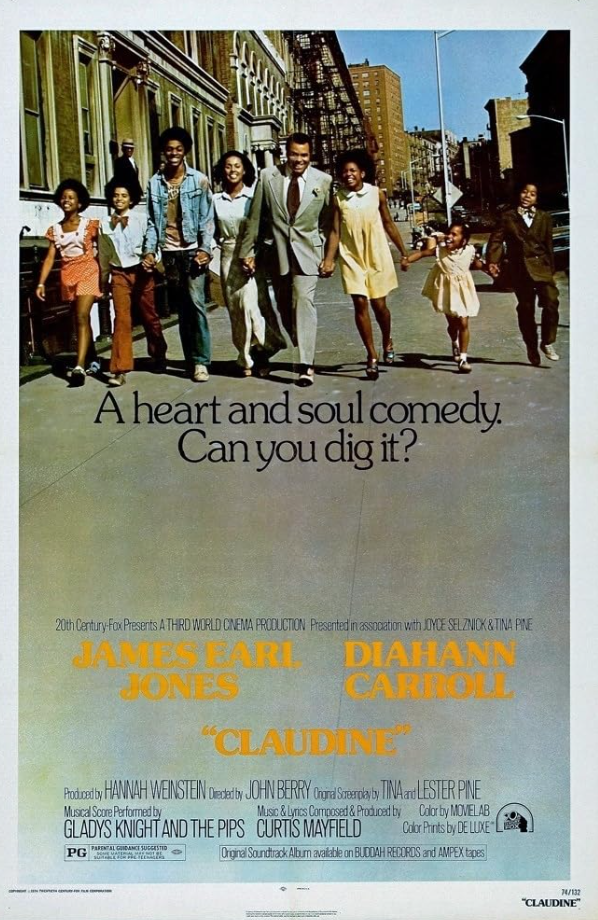
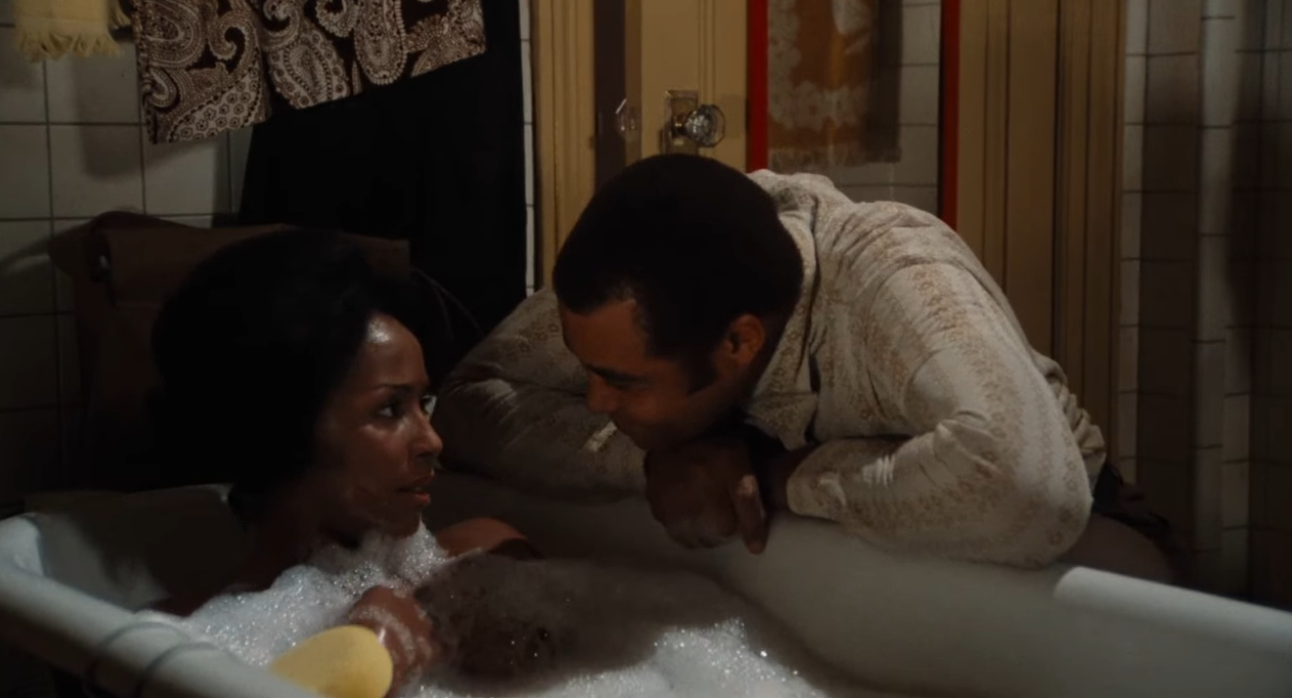
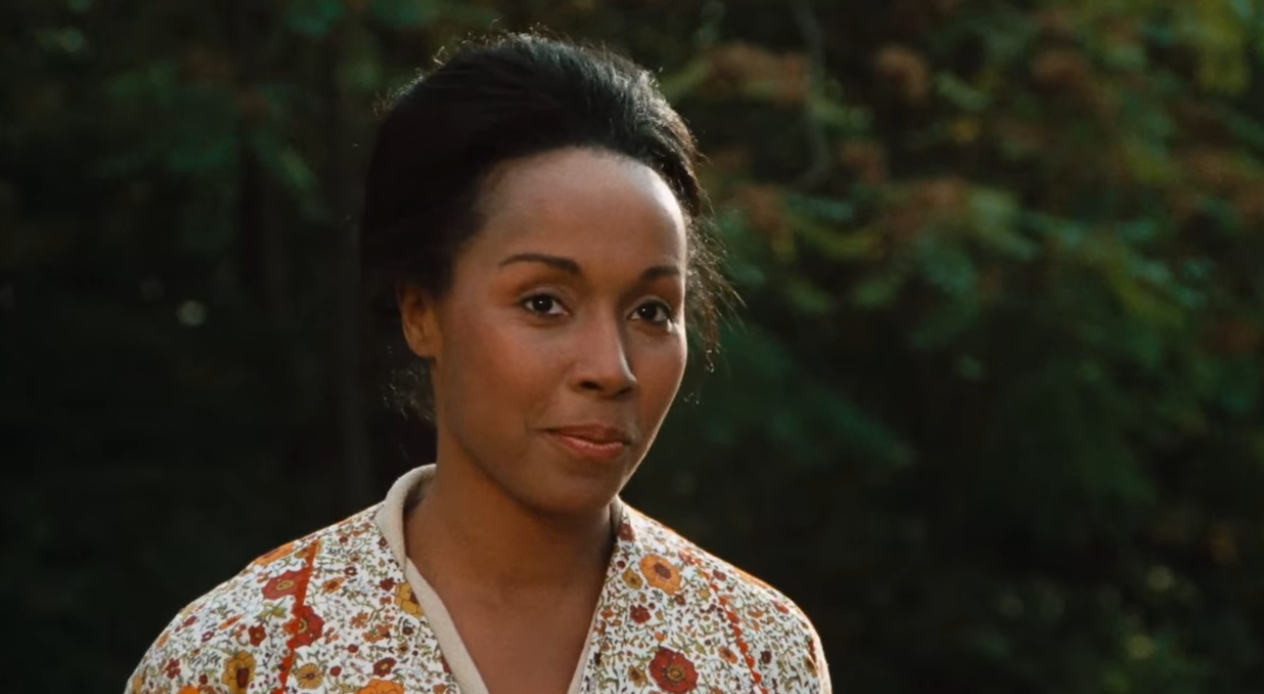
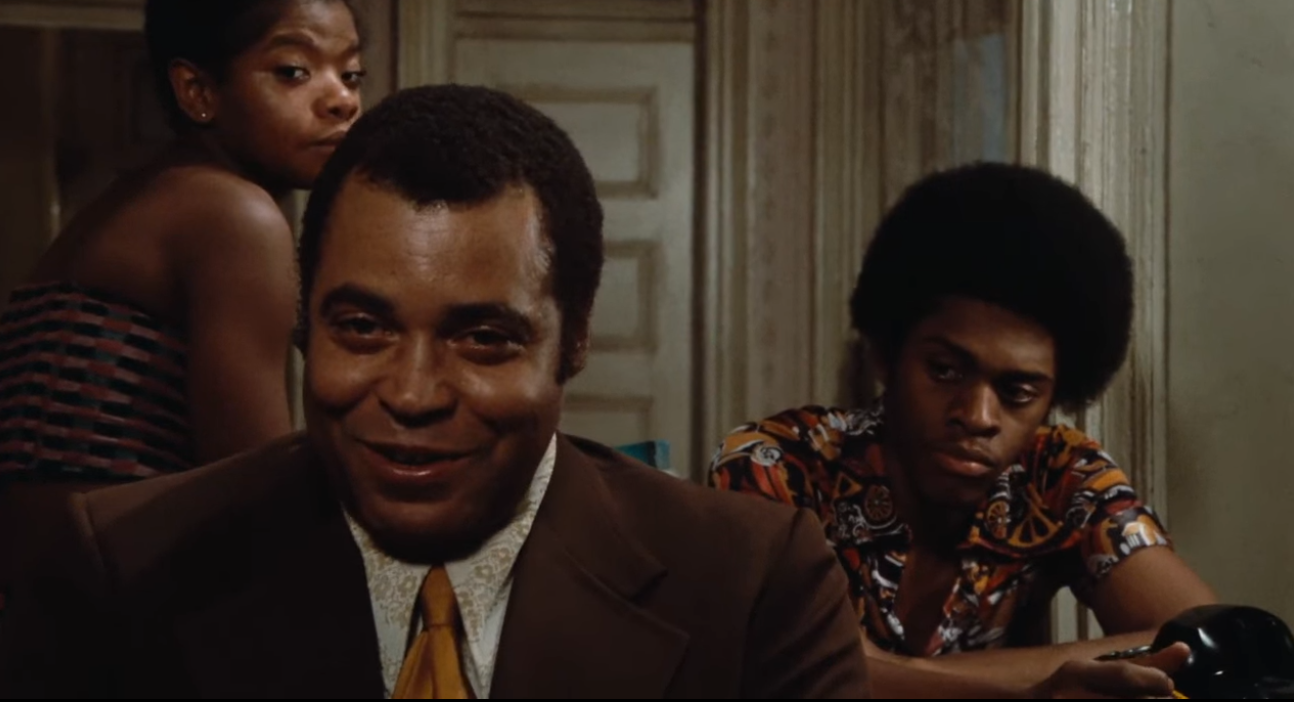
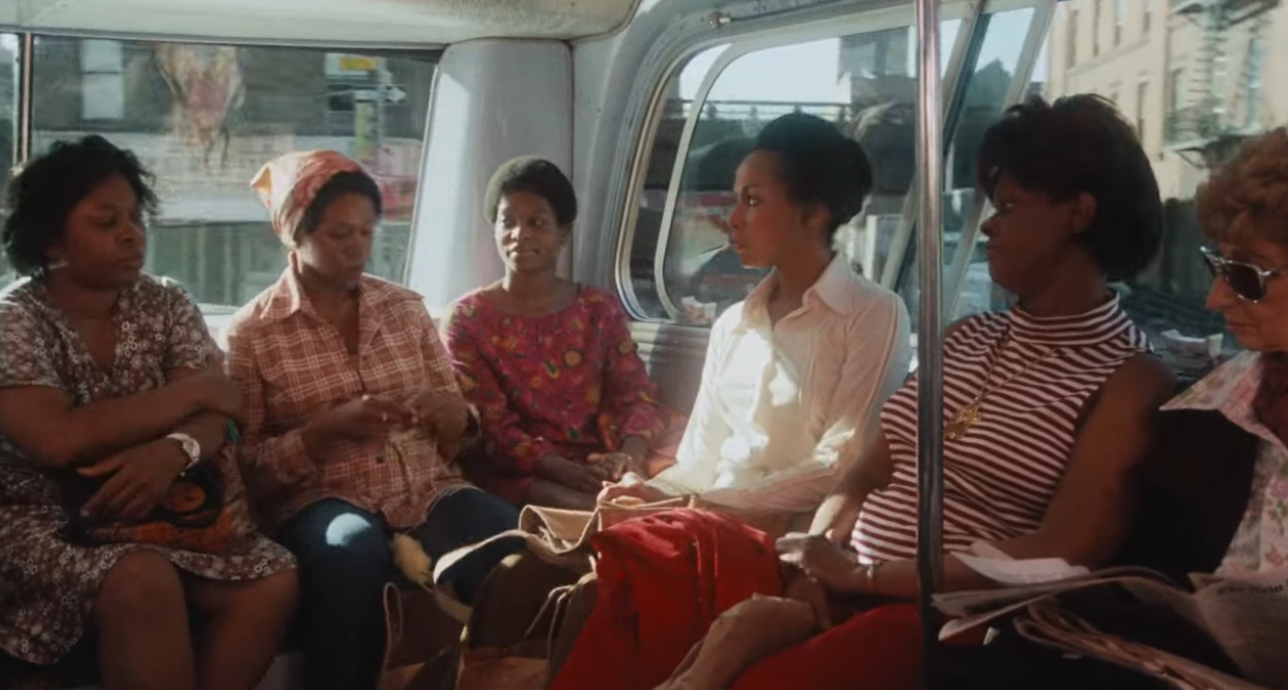
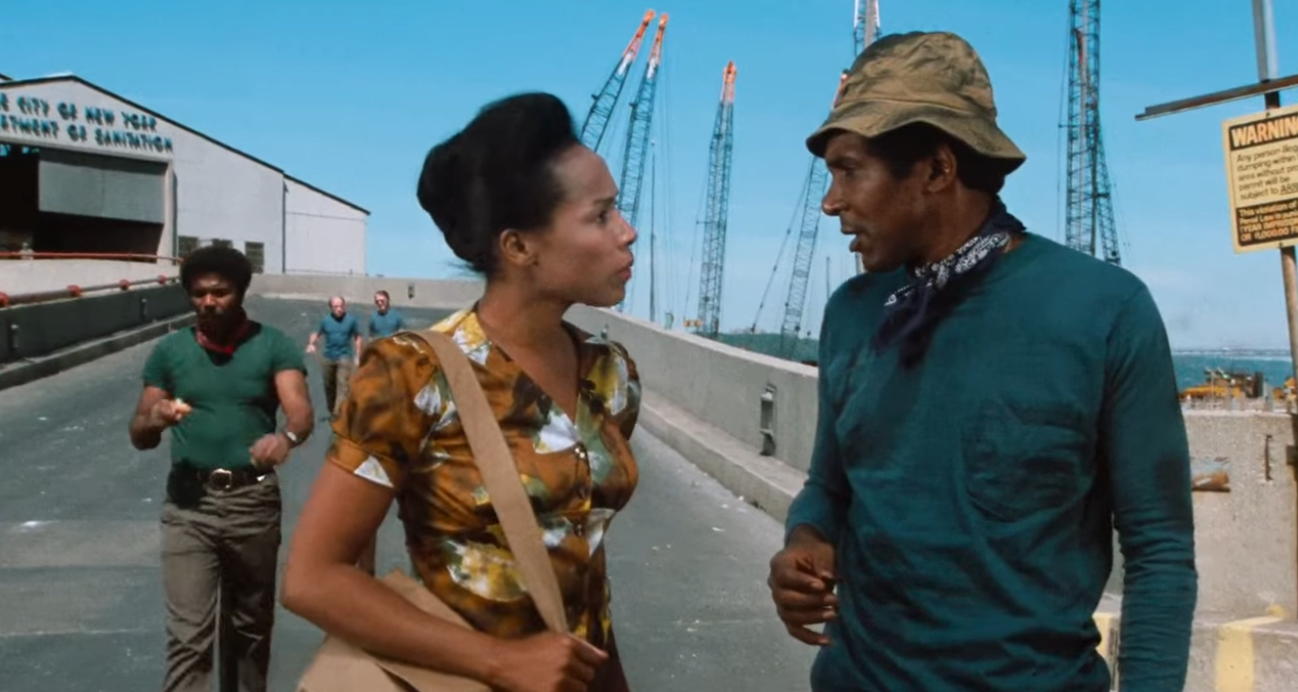
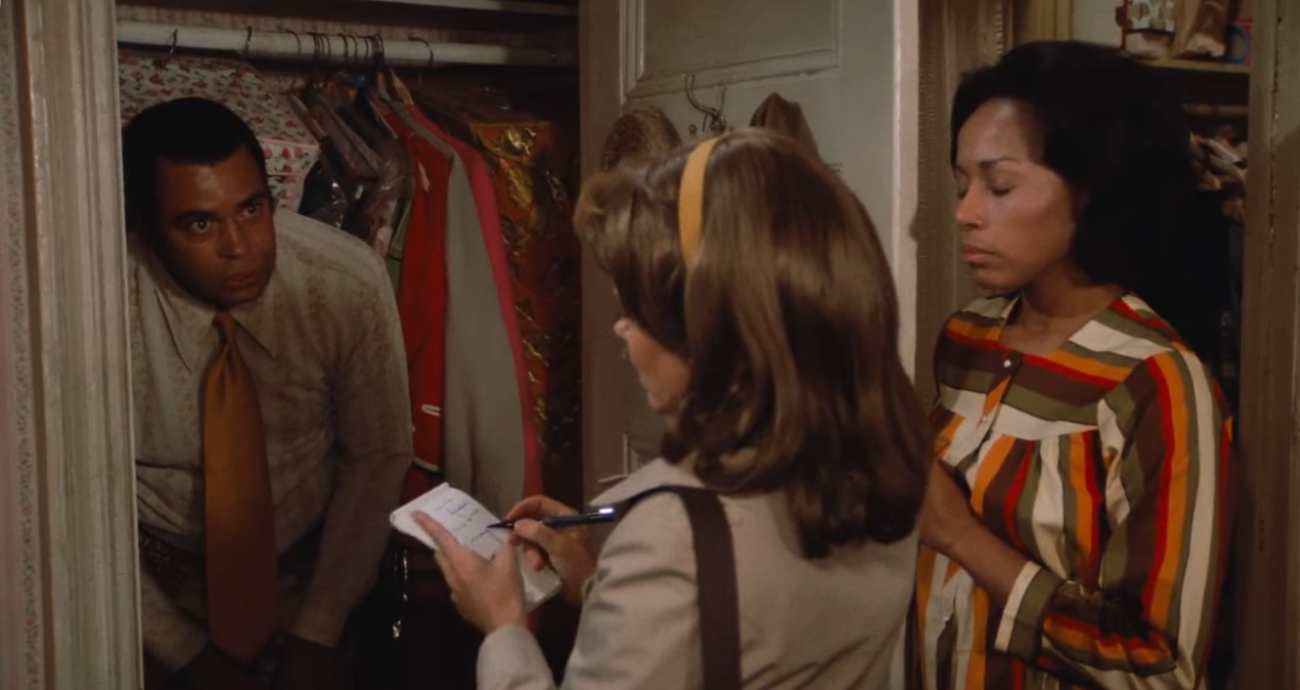
Diahann Carroll — perhaps best known for starring in the T.V. show “Julia” (1968-1971) — won an Oscar nomination for her role as the title character in this romantic-comedy which showed audiences a more authentic, albeit still heavily Hollywoodized, vision of Black urban life in the 1970s. It’s impossible not to root for Carroll (a last minute replacement for her good friend Diana Sands) and Jones, whose romance is a sweet if chaotic balm in the midst of Carroll’s hectic life:

… centered on navigating a truly dehumanizing “welfare” system which forces Carroll to make terrible but necessary decisions about her home life.

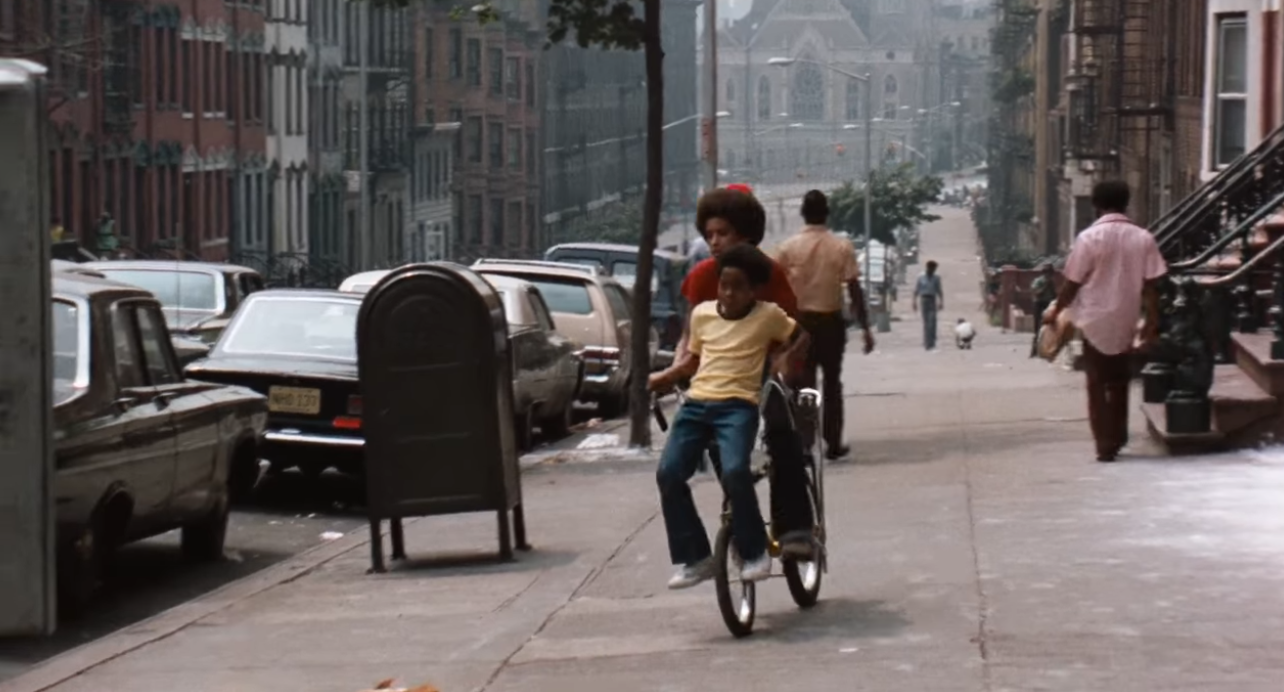
The location shooting in Harlem is delightful, and surely adds to the nostalgia and appreciation many feel for this film.

Notable Performances, Qualities, and Moments:

  • Diahann Carroll as Claudine
  • James Earl Jones as Roop
  • Excellent use of location shooting in Harlem

  • A frank, darkly comedic look at the absurdities of the welfare system
  • Curtis Mayfield’s score (performed by Gladys Knight and the Pips)

Must See?
Yes, for Carroll and Jones’ performances. Listed as a Sleeper in the back of Peary’s book.

Categories

  • Noteworthy Performance(s)
  • Oscar Winner or Nominee

Links:

Absolute Beginners (1986)

Absolute Beginners (1986)

“We don’t sell things – we sell dreams.”

Synopsis:
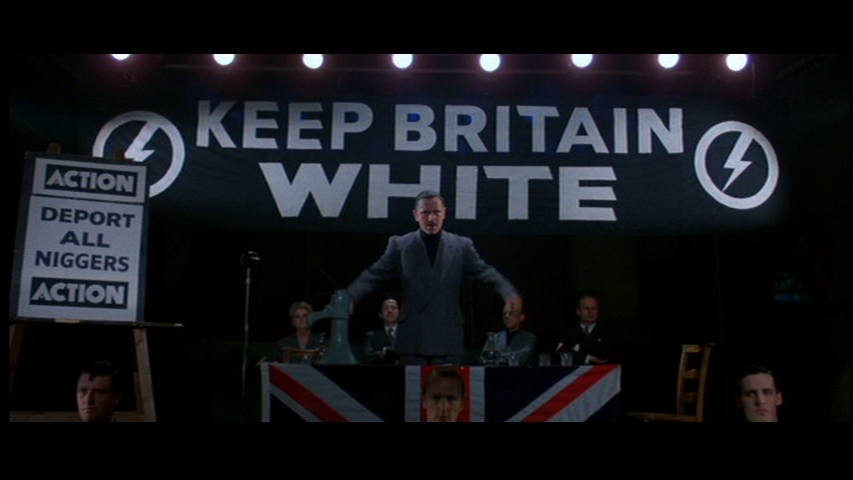
In 1950s Britain, an aspiring photographer (Eddie O’Connell) is distressed when his girlfriend (Patsy Kensit) is wooed away from him by a wealthy dandy (James Fox) — but soon O’Connell himself is caught up in a complex web of fame and violence, including being hired by a racist property developer (David Bowie).

Genres, Themes, Actors, and Directors:

  • David Bowie Films
  • James Fox Films
  • Love Triangle
  • Musicals
  • Photographers
  • Racism and Race Relations

Review:
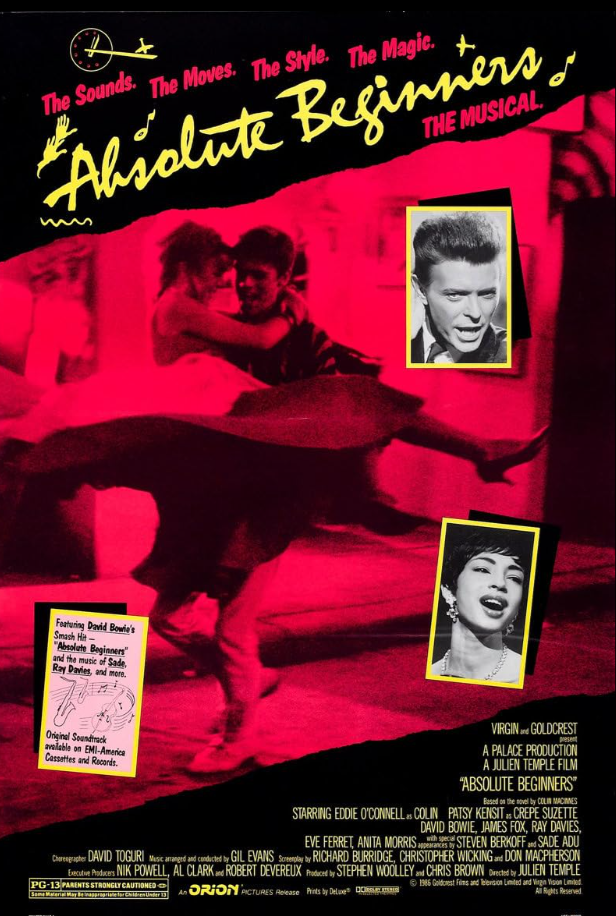
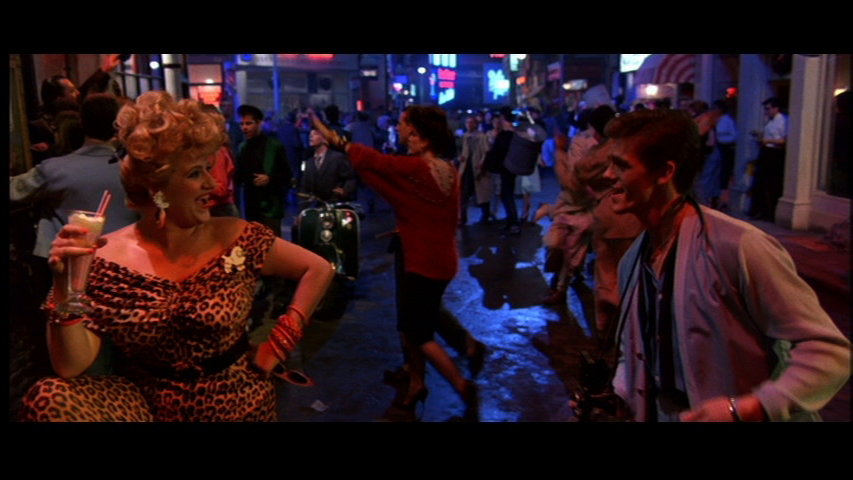
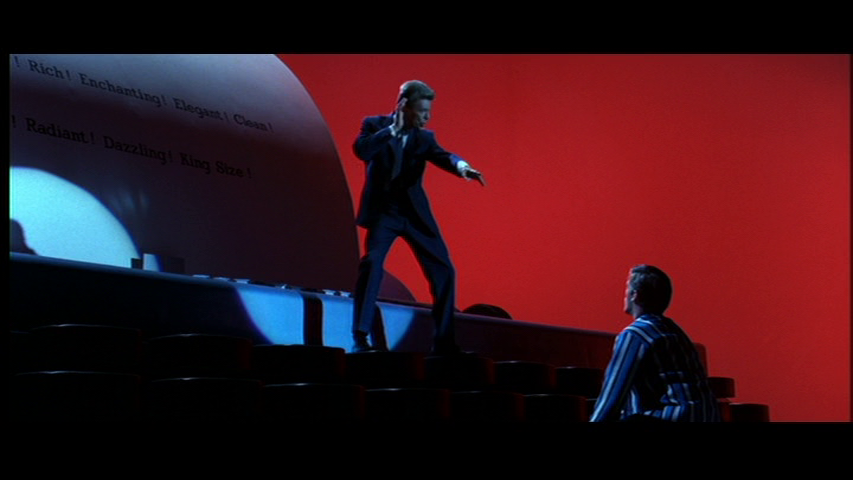
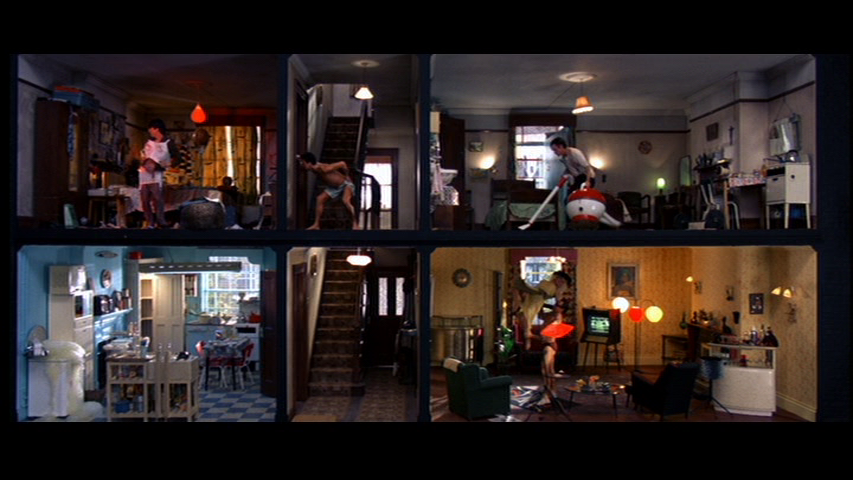
Based on a novel by Colin MacInnes, this wildly expressive musical — directed by Julian Temple, whose other GFTFF title is The Great Rock and Roll Swindle (1980) — was notorious for contributing towards the bankruptcy of Goldcrest film company. Indeed, it never quite took off with audiences, but it’s an unusual enough production to merit viewing — especially given its creative sets and staging (including an impressive single-take opening shot):

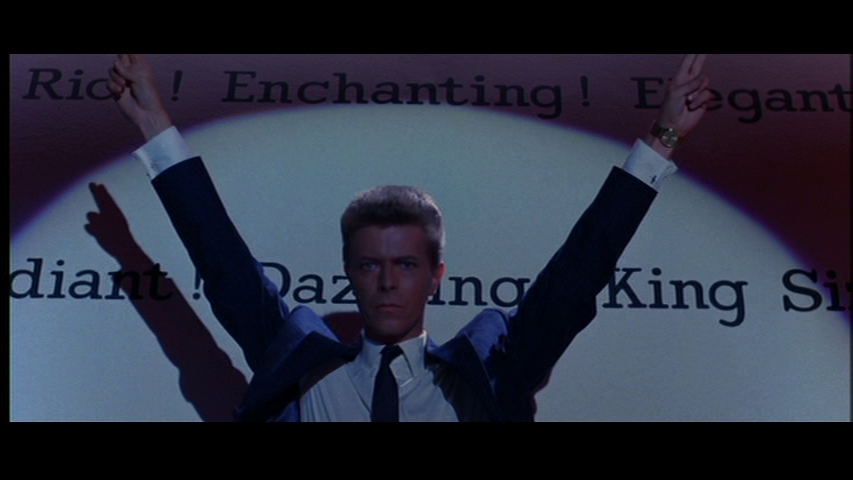
… and the casting of David Bowie. (According to IMDb’s Trivia page, “Julien Temple asked David Bowie to write music for the film. After reading the book and then the script, Bowie agreed to Temple’s offer if he could also play the part of Vendice Partners.”)

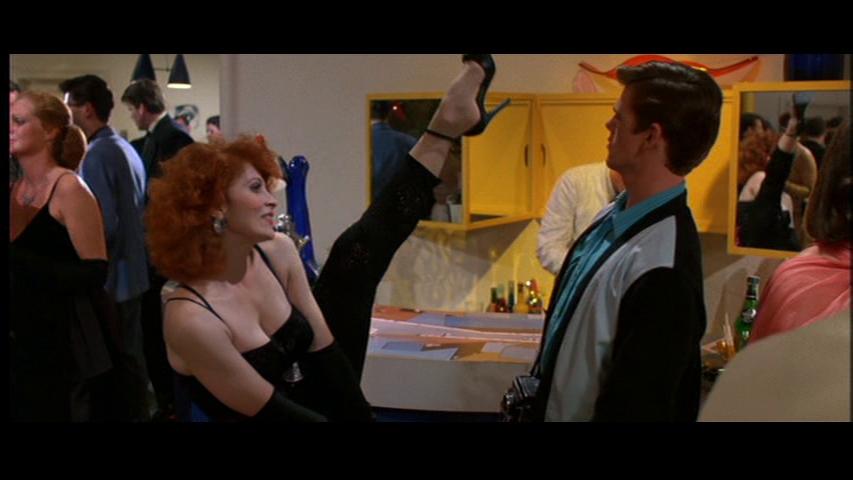
In his review, DVD Savant questions whether the film is actually “good,” noting regardless that “the movie is eye candy from one end to the other, a parade of color and costume creativity, flashy but not exaggerated editing, and the occasional snappy choreographic scene.” Indeed, it’s literally hard to pull your eyes away from this flick, given that “there are no calm scenes. To express the vitality and urgency of his characters, Temple keeps the camera moving at all times through crowds of eccentric supporting and bit players.”

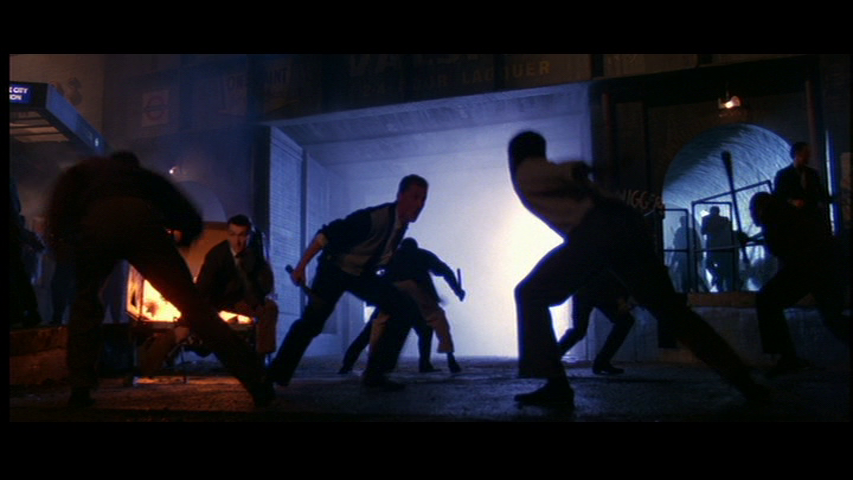
While there is far too much going on narratively, one can’t accuse Temple or his team of shying away from appropriately controversial topics, ranging from the toxic allure of fame and capitalism to violent systemic racism. To that end, one more trivia item on IMDb offers a useful comparison:

Elements of this film seemingly share a similar genre with West Side Story (1961), most obviously a 1950s period musical set against a background of gangs and knife crime. But, where West Side Story is well-known as a version of Romeo and Juliet, there’s a major element in this film that clearly continues to affect its box office takings, lack of home video releases, and lack of television showings, decades later, is primarily the volume of racist material, unavoidable due to the underlying story, and the “fascists” portrayal, even though its set in the 1950s, which can be taken out of context. Shot as a straight drama, the film may have had a completely different success.

Notable Performances, Qualities, and Moments:

  • Olive Stapleton’s creative cinematography


  • Vibrant production design, sets, and costumes
  • Many creatively staged sequences

  • A daringly forthright expose of xenophobia and racism in Britain
    Content warning: overt use of the N word
  • David Bowie as Vendice Partners

Must See?
Yes, once, as a most unique film of its era, and for its historical relevance. Listed as a Cult Movie in the back of Peary’s book.

Categories

  • Historically Relevant

Links:

Woman Under the Influence, A (1974)

Woman Under the Influence, A (1974)

“Mabel is not crazy; she’s unusual.”

Synopsis:
When a construction worker (Peter Falk) and father of three finds himself unable to handle the increasingly unconventional behaviors of his wife (Gena Rowlands), he wonders about next steps to take.

Genres, Themes, Actors, and Directors:

  • Feminism and Women’s Issues
  • Gena Rowlands Films
  • Housewives
  • John Cassavetes Films
  • Marital Problems
  • Mental Breakdown
  • Peter Falk Films

Review:
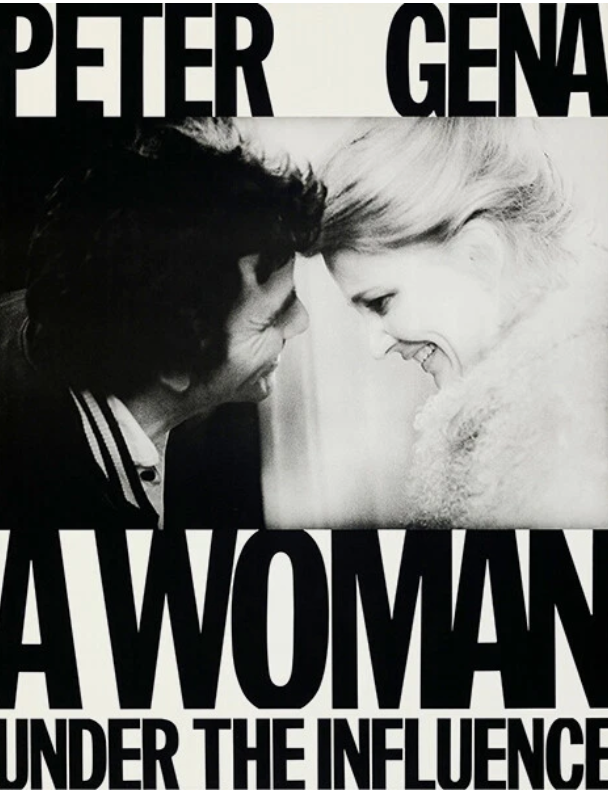
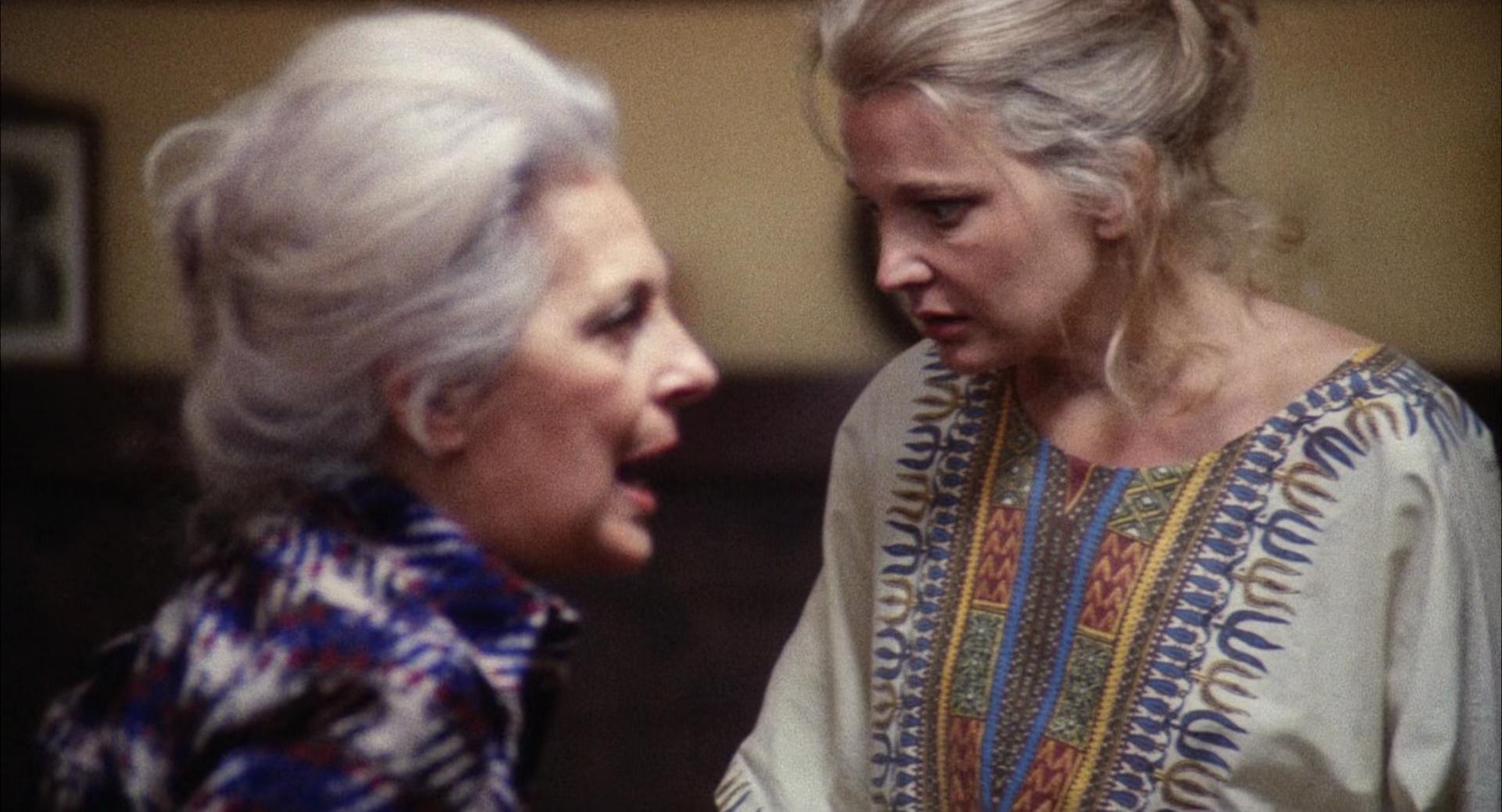
Husband-and-wife-team John Cassavetes and Gena Rowlands’ fourth collaboration was this Oscar-nominated (for Best Director and Best Actress) neo-realistic classic accurately described by DVD Savant as “fascinating, exhausting and highly rewarding.” Indeed, the film (scripted by Cassavetes) is so emotionally exhausting that I put off a revisit for more than 20 years, until my 17-year-old daughter watched it recently in a film class and was super-eager to discuss it with me. Bingo! I had my motivation to re-engage with this heartbreaking portrait of an eccentric, loving, playful, overly-honest woman whose intensities and inability to conform are simply too much for society (and her husband) to handle.

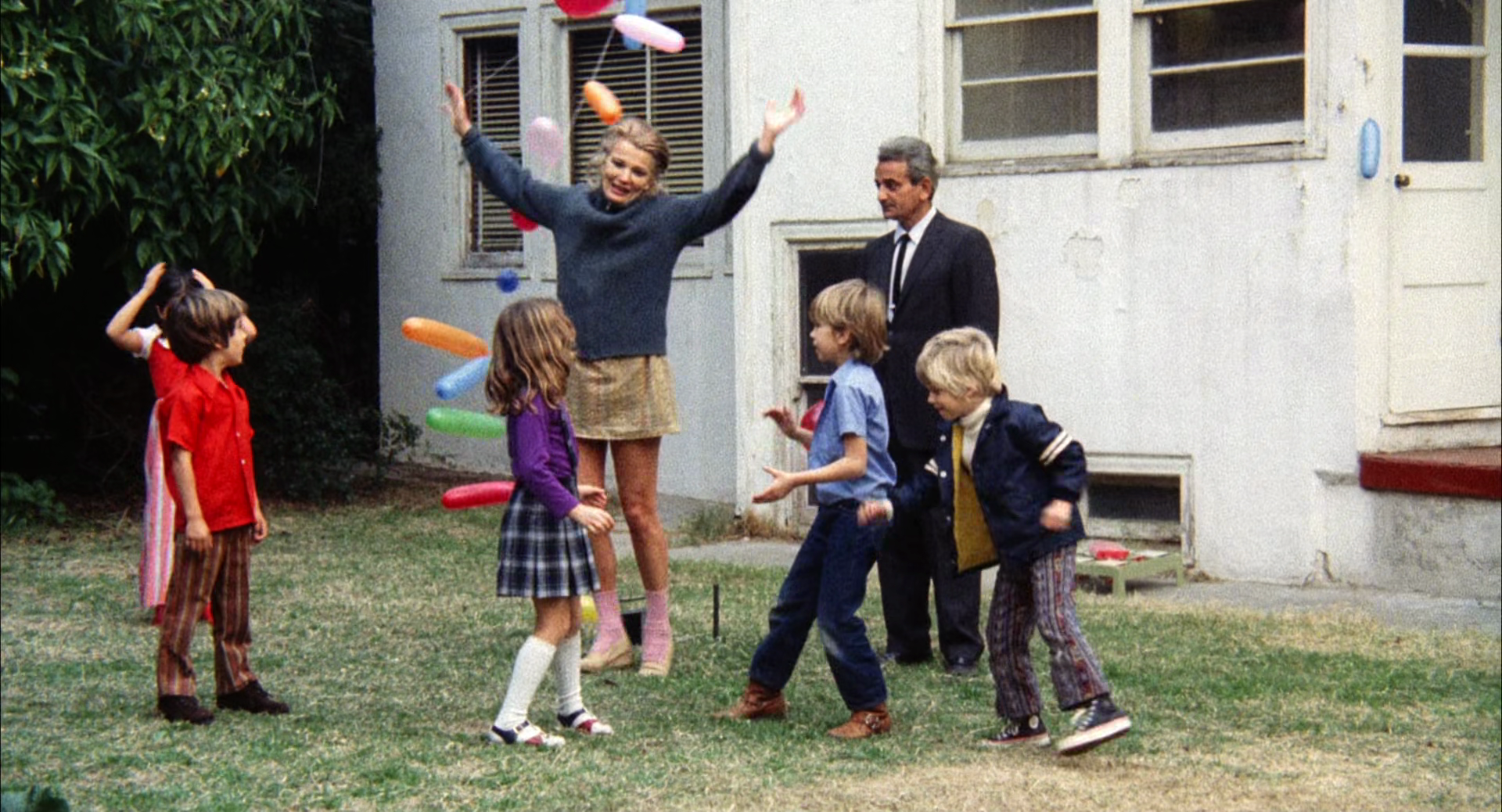
What I was most curious about upon this second viewing — much later in my life, now with three kids of my own — was to get a better sense of what, exactly, Mabel was “under the influence” of: delusions? substances? her husband? society? patriarchy? all of these? (This remains hotly debated; check out Reddit for robust discussions.) In the opening scene, while dealing with disappointment that her husband Nick (Falk) can’t make it home for a specially planned evening together, she acts out through drinking and dallying.

At this point, we feel sorry for hardworking Nick, who’s stuck in a laborious overnight shift and dreads disappointing his wife. However, when he proceeds to bring home his entire crew the following morning for socializing — rather than returning alone, apologizing, and doing what he can to make things up to Mabel — we begin to see that his coping responses aren’t exactly healthy, either.

Adding to Mabel’s stress is Nick’s overbearing mother (played by Cassavetes’ real-life mom, Katherine Cassavetes), who doesn’t hesitate to share her true feelings: “[My son] says you give him nothing! You’re empty inside! Your children are naked! They’re hungry!”

Also part of Mabel’s living nightmare is the presence of a seemingly kind but insistent doctor (Eddie Shaw) determined to shoot her up with sedatives and take her away from her beloved kids.

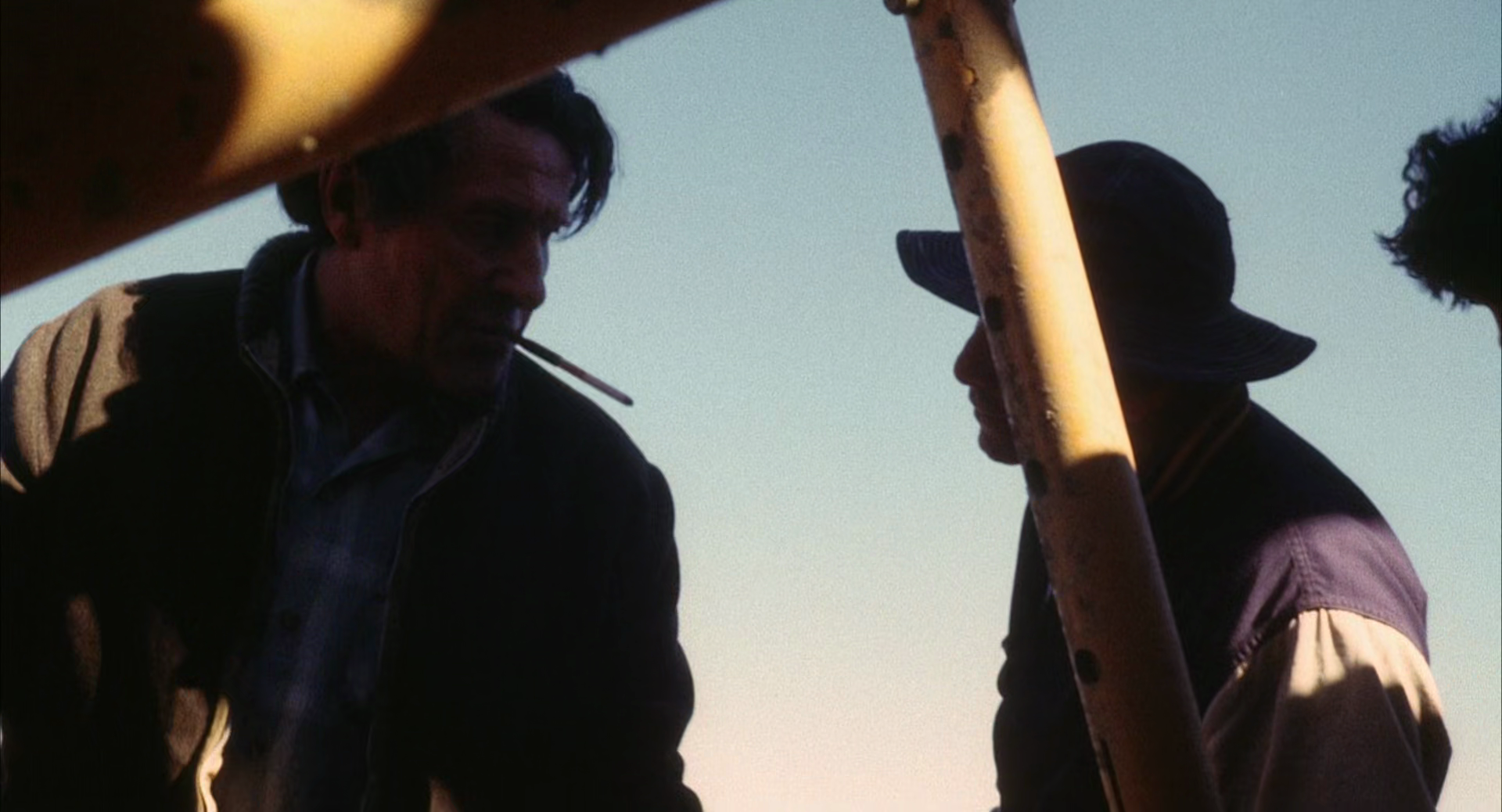
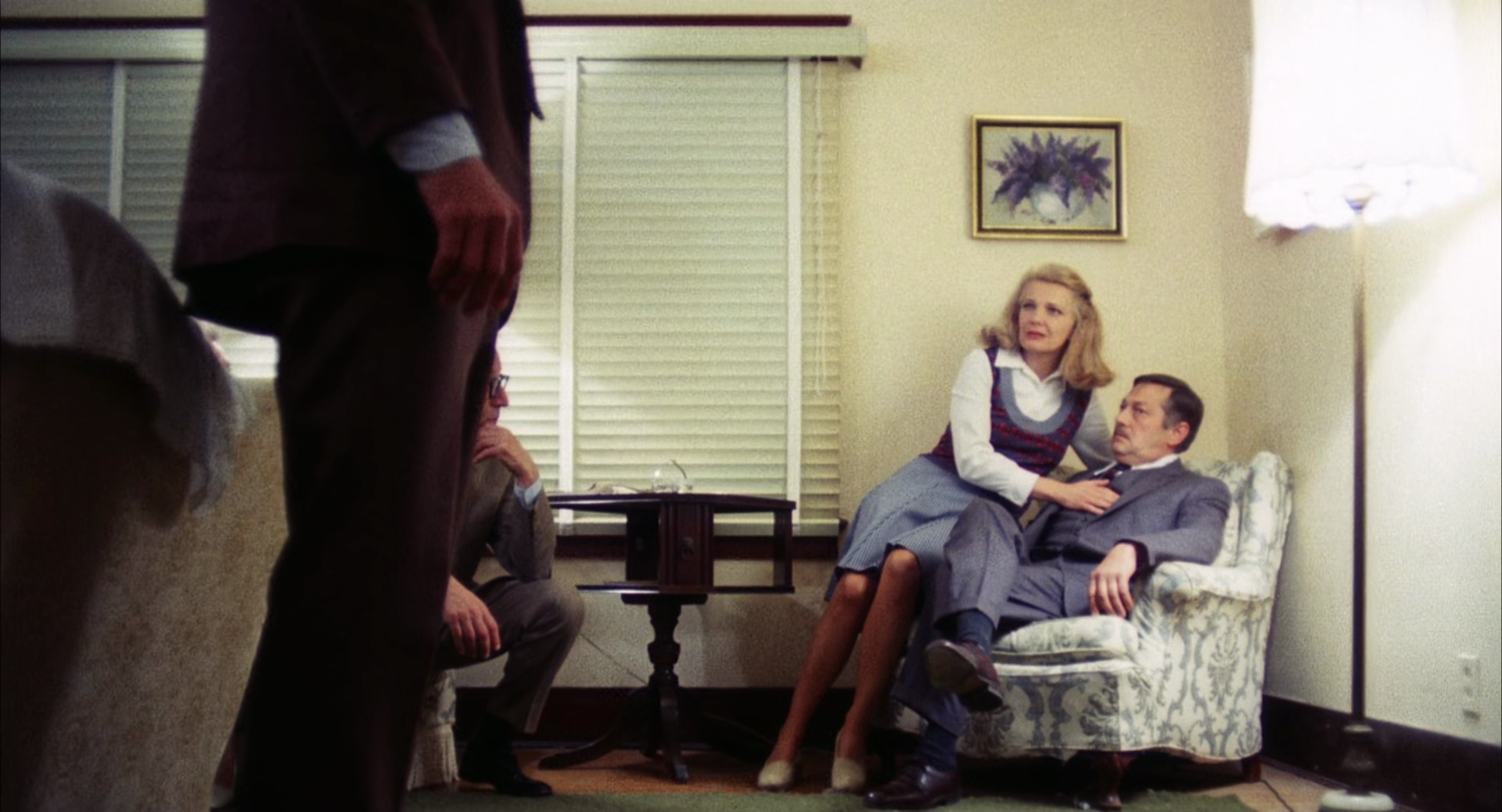
Meanwhile, we’re also given stronger indications of Nick’s racism and short temper, particularly during a harrowing work-site scene depicting his Mexican colleague tumbling down a ledge after Nick yells at him.

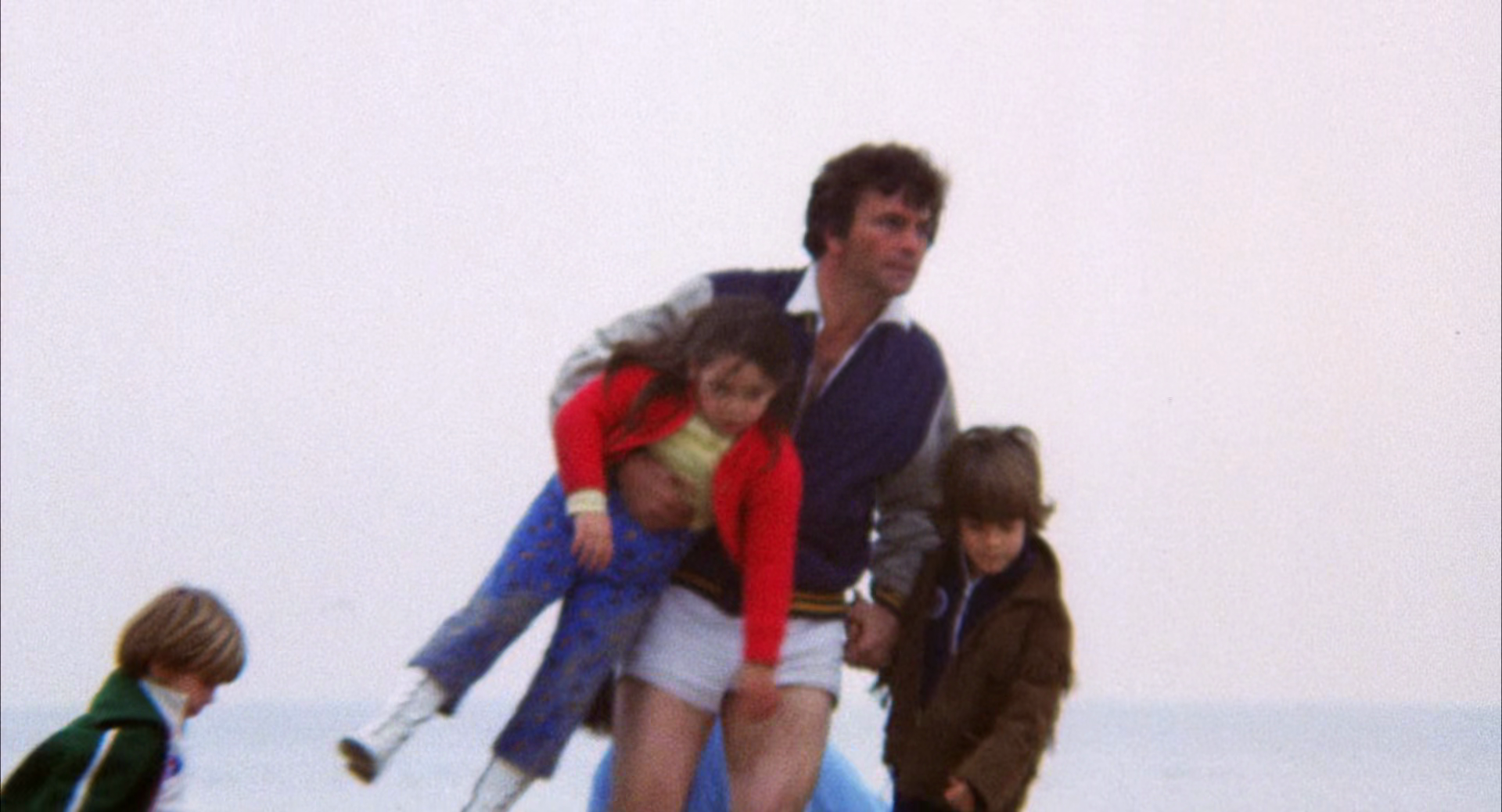
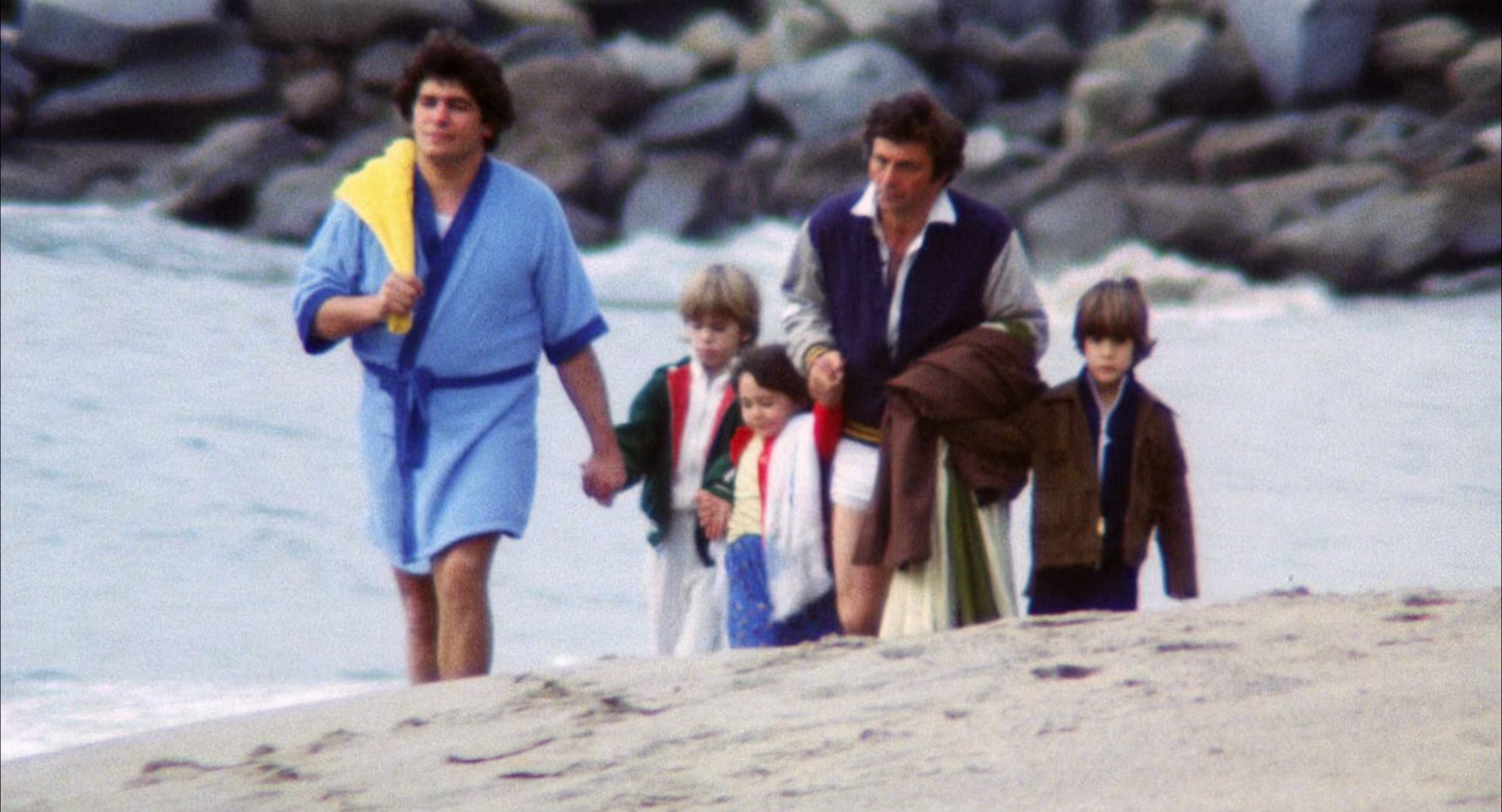
Is Nick a MAN “under the influence” as well? Yes, he clearly is — but, as a (white) male, he also gets to make the decisions in his spheres of influence: he drags his kids to the beach for a requisite family outing, not only failing to have a fun time with them, but giving his boys beer in the back of a truck on their way home.

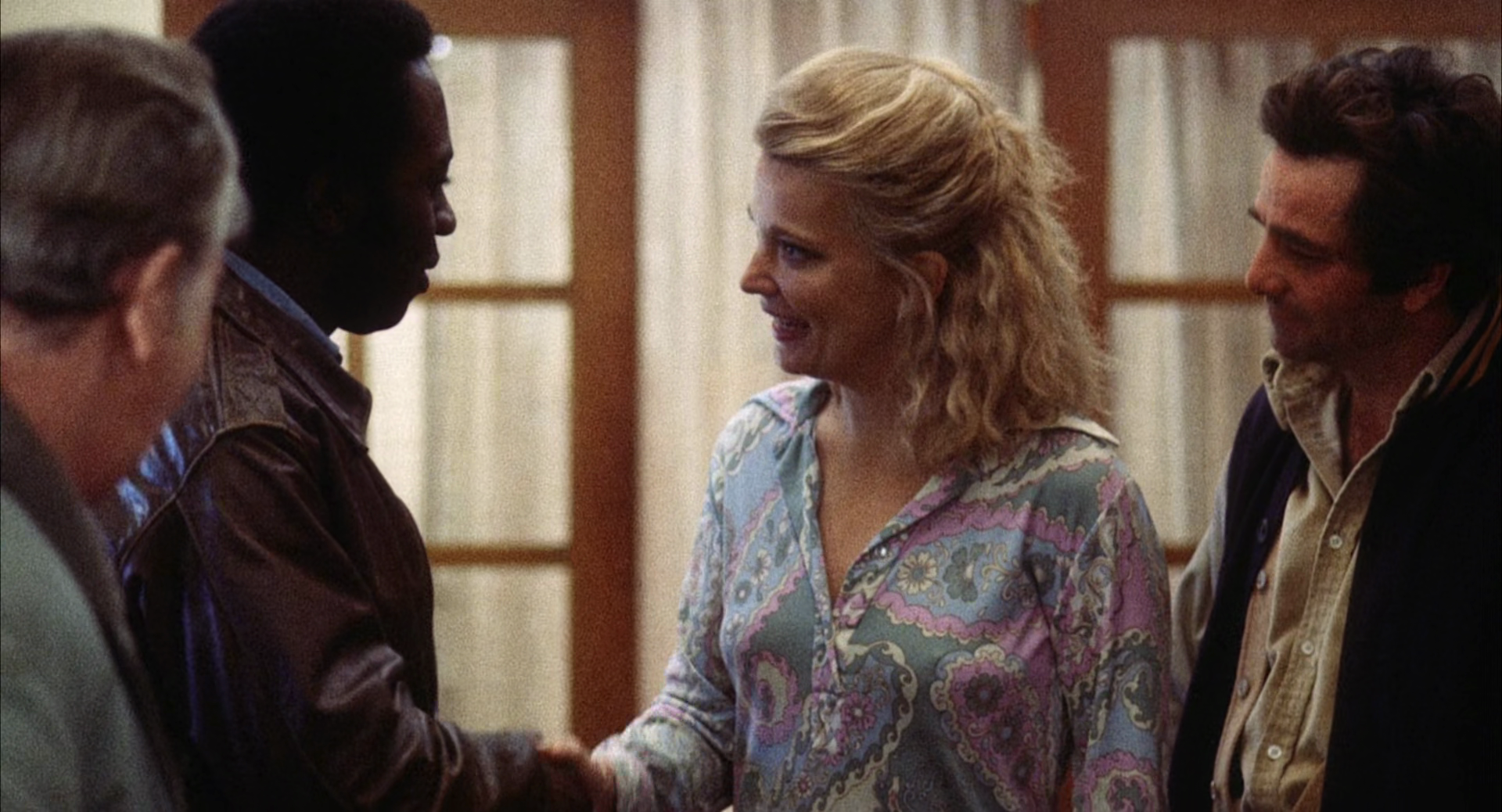
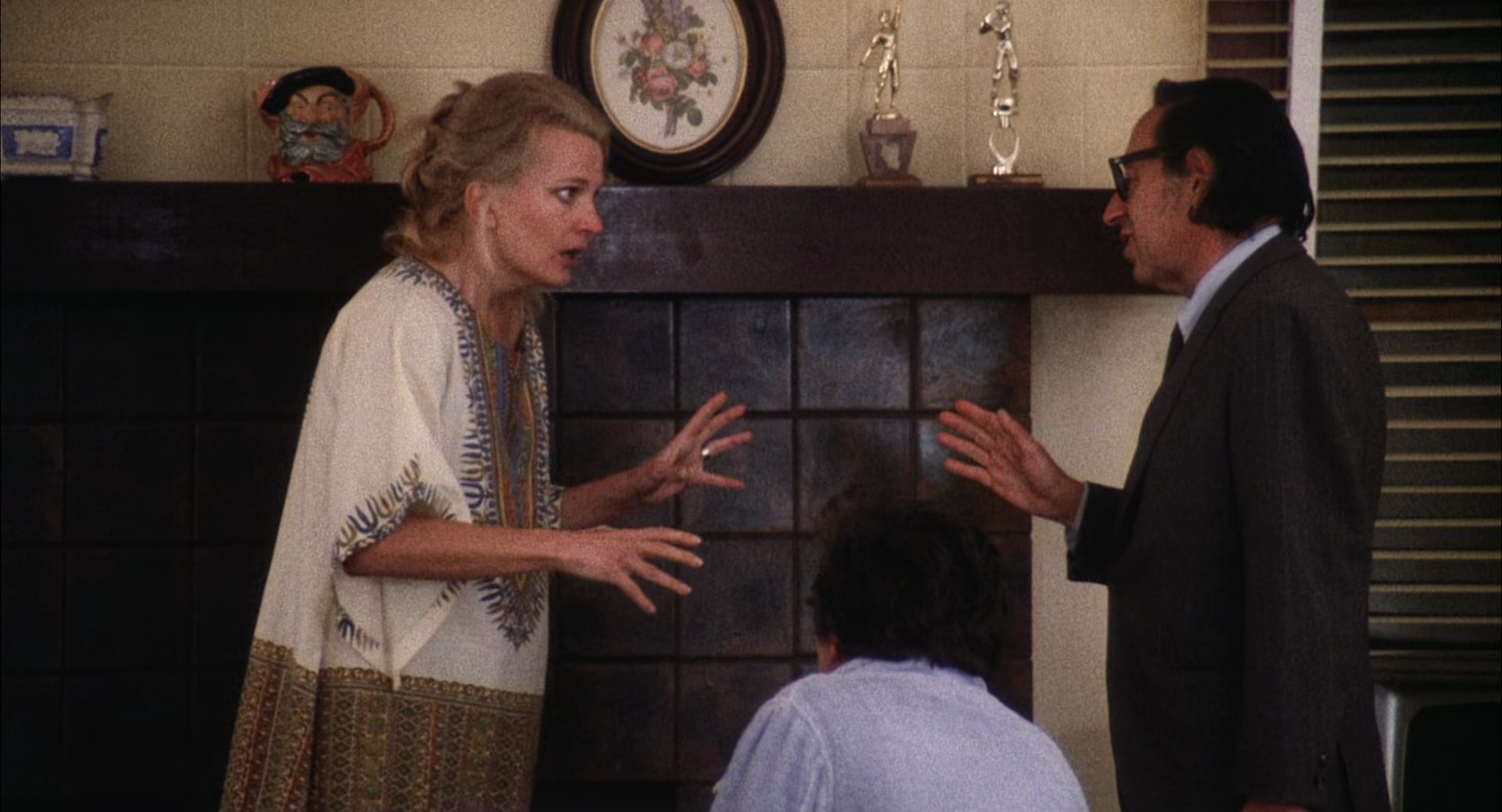
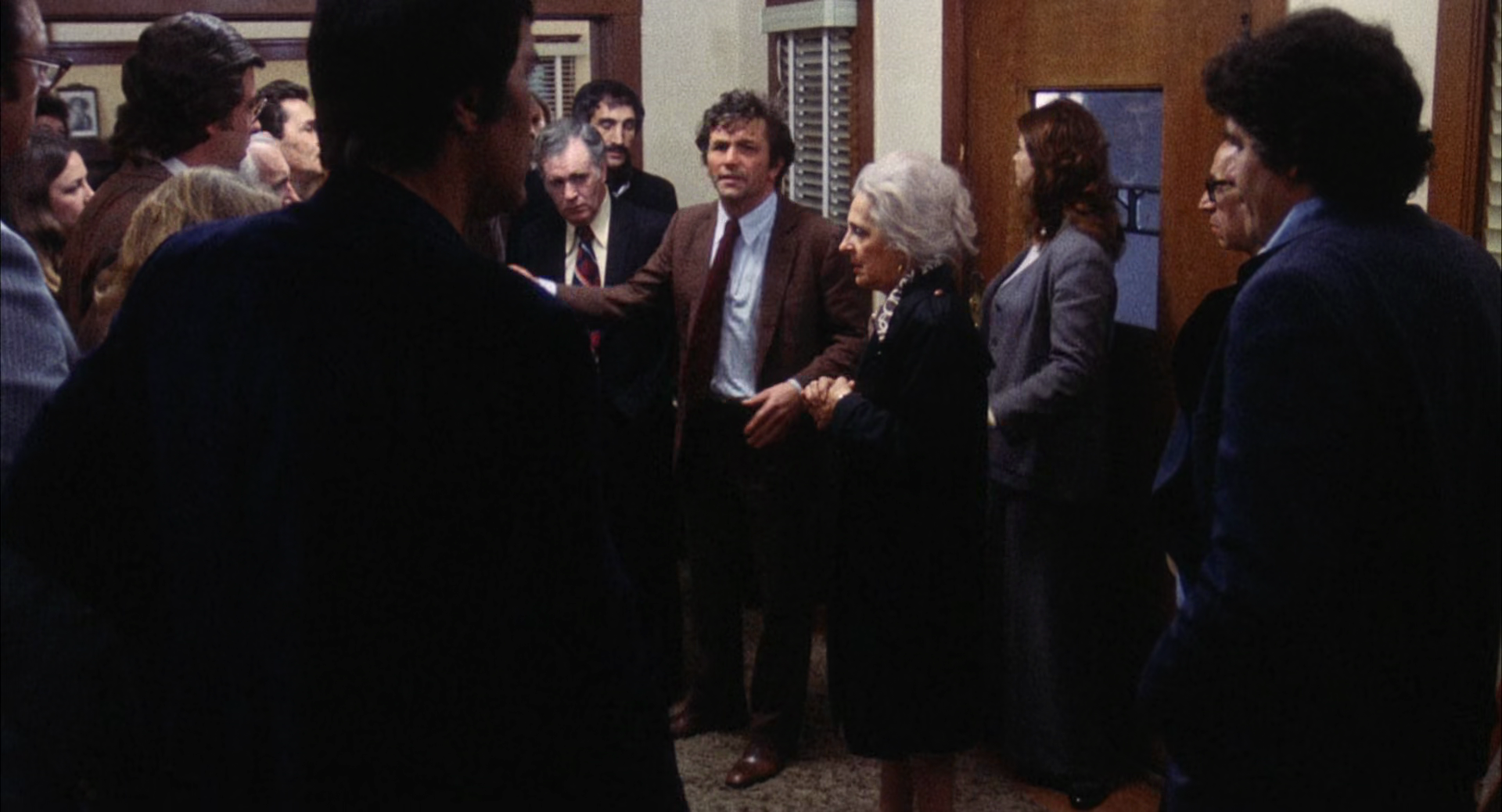
The final harrowing scenes take place six months later, back at Nick and Mabel’s home (filmed in “a slightly run-down house on Taft Avenue, just off Hollywood Boulevard”), where Nick has inexplicably invited seemingly everyone he knows (and then some) over in anticipation of celebrating Mabel’s arrival back from her enforced hospitalization.

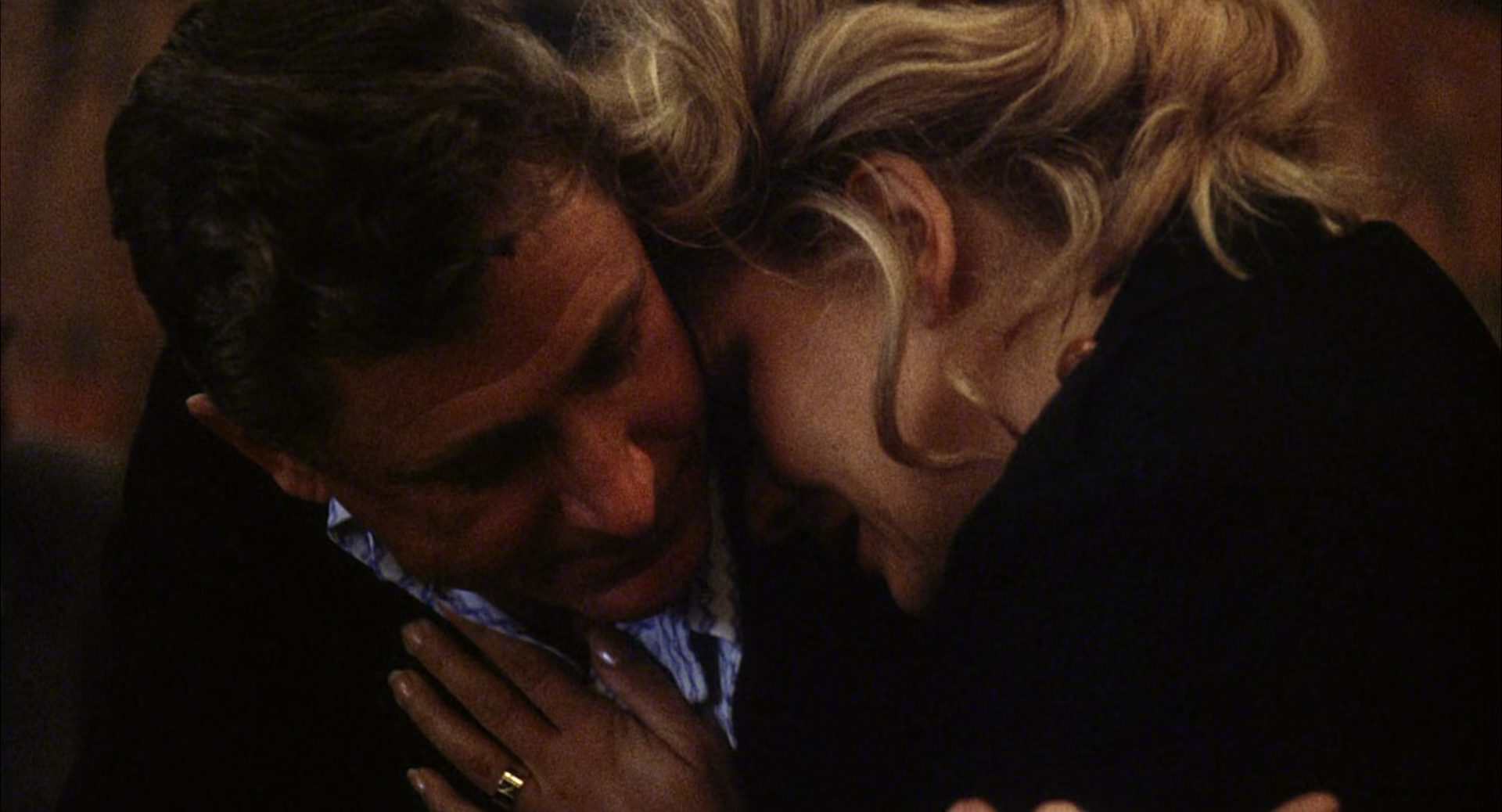
In truth, Nick doesn’t actually WANT to be left alone with his wife — despite the fact that this (and being with her kids) is all she wants after being gone for so long. Meanwhile, Nick repeatedly implores her to “Just be yourself — be yourself!”, yet doing just that is precisely what got her put away. Talk about a double-bind. Mabel pleads with her clueless father (Fred Draper) to “just stand up” for her, but he literally has no idea what she means by this, and is thus yet another unreliable male figure in her life. (My daughter told me this was the most heartbreaking scene of all for her.)

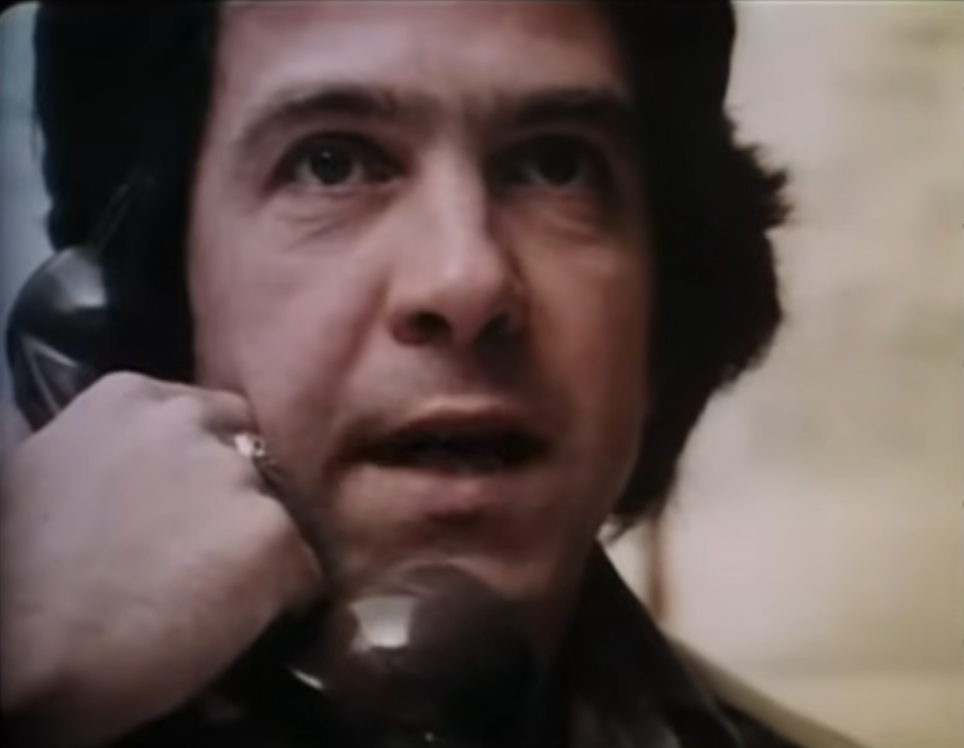
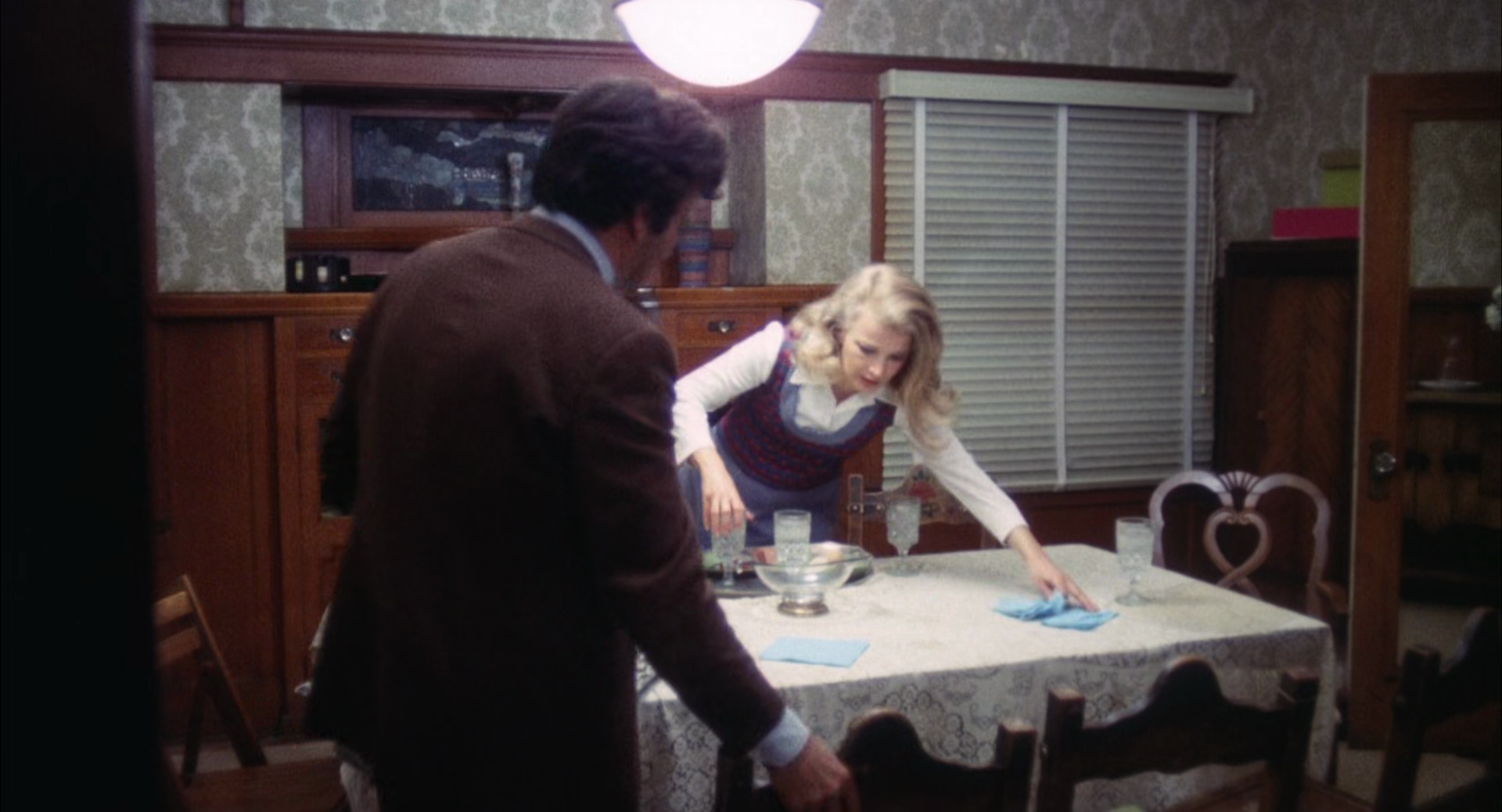
In the film’s final unnerving moments, Nick and Mabel are co-habitating once again in their mostly empty house, but can’t stop moving, working, cleaning… Will they be able to repair things? At the very least (as Falk pointed out in a later interview reflecting back on the film), his character doesn’t pick up the phone while it’s ringing — thus presumably ignoring his mom, for awhile. It’s a start.

Notable Performances, Qualities, and Moments:

  • Gena Rowlands as Mabel
  • Peter Falk as Nick
  • Fine cinematography
  • Excellent use of natural locations

Must See?
Yes, as a memorable neo-realist classic.

Categories

  • Important Director
  • Noteworthy Performance(s)
  • Oscar Winner or Nominee

Listed as a Cult Movie and a Personal Recommendation in the back of Peary’s book.

(Listed in 1001 Movies You Must See Before You Die)

Links:

Rocky IV (1985)

Rocky IV (1985)

“I must break you.”

Synopsis:
At the height of the Cold War, Rocky Balboa (Sylvester Stallone) avenges his friend Apollo Creed (Carl Weathers) by returning to the ring to fight against a formidable Soviet adversary (Dolph Lundgren).

Genres, Themes, Actors, and Directors:

  • Boxing
  • Cold War
  • Sylvester Stallone Films
  • Talia Shire Films

Response to Peary’s Review:
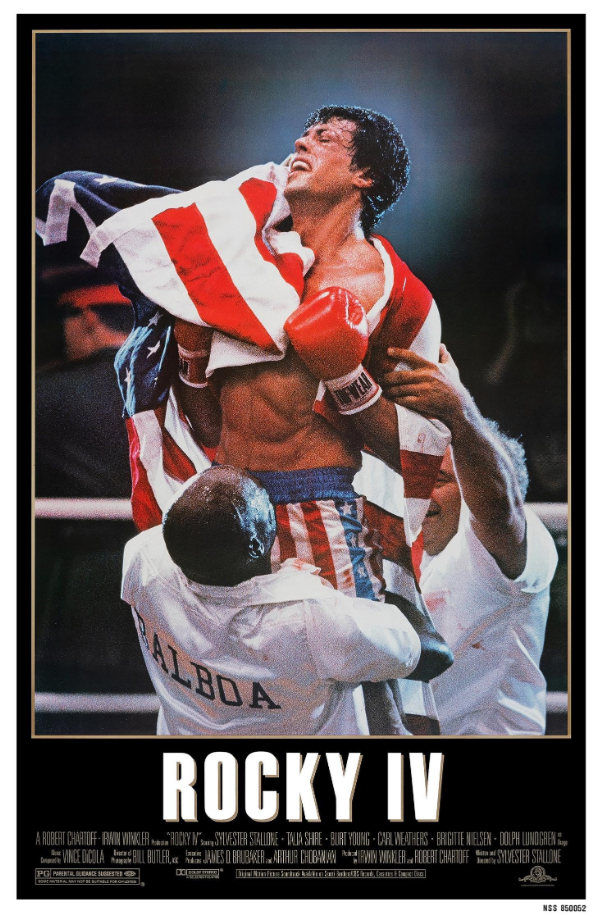
Peary accurately refers to this “phony baloney from Sylvester Stallone” as “the worst, most embarrassing film of the series.” Keeping in mind that Peary’s GFTFF was published in 1986, he writes that it “is the kind of manipulative film that they’ll show in Russia to illustrate the American cinema’s absurd portrayal of both American heroes and the Russian people,” and expresses his frustration that Stallone doesn’t seem to “understand that his character need not appeal to everyone.”

He further points out the “lazy” dialogue, noting that “conversations between Rocky and wife Adrian (Talia Shire) have reached the point where long sentences last five simple words” (he’s overexaggerating to make his point), and that since “she has nothing to say,” she simply “smiles, looks worried, [and] looks pained.”

Most egregiously, Peary writes, “Stallone’s direction has also become lax, so that his film is comprised of many montages with blaring music in the background” with each “equivalent to a rock video” which “could be shown intact as just that.” (According to IMDb, one calculation found that 31.9% of the movie consists of montages!) These are either flashbacks to the earlier films in the series, or laughably simplistic comparisons between Rocky’s training style (in the harsh environs of the Russian landscape — actually filmed in Wyoming) and Drago’s “high tech” indoors training, surrounded by his support team.


Peary points out that “at least Drago — a sort of handsome, icier version of Richard Kiel’s ‘Jaws’ – is a more than satisfyingi villain” who “it’s a pleasure” to see Rocky ripping into.

There’s not much more to say about this one except that it did really well at the box office; won 5 Razzies (and was nominated for 4 more); and was re-released as a director’s cut (entitled Rocky IV: Rocky vs. Drago) in 2021.

Notable Performances, Qualities, and Moments:

  • Skilled (if highly over-used) editing and montage

Must See?
No; skip this one.

Links:

Rocky III (1982)

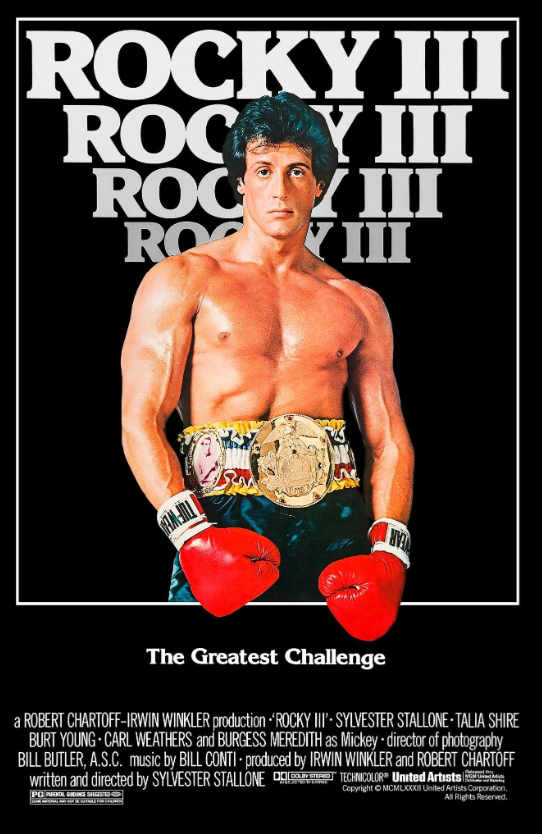
Rocky III (1982)

“You ain’t been hungry since you won that belt.”

Synopsis:
When Rocky Balboa (Sylvester Stallone) — riding high on the hog from his previous successes — loses his heavyweight title to menacing Clubber Lang (Mr. T.), he receives help from his former nemesis (Carl Weathers) in training for the ultimate showdown.

Genres, Themes, Actors, and Directors:

  • Boxing
  • Burgess Meredith Films
  • Sylvester Stallone Films
  • Talia Shire Films

Response to Peary’s Review:
In his review of Rocky III, Peary notes that this third film in the franchise — in which Stallone “loses his title to vicious killing machine Clubber Lang (imposing Mr. T) and, for some reason, his self-respect in the process” — is “fairly predictable” and “lacks the cohesion of [Stallone’s] earlier efforts”; but what “distinguishes it somewhat is that Rocky must cope with fear, a theme that, oddly enough, had not really been explored in boxing films.

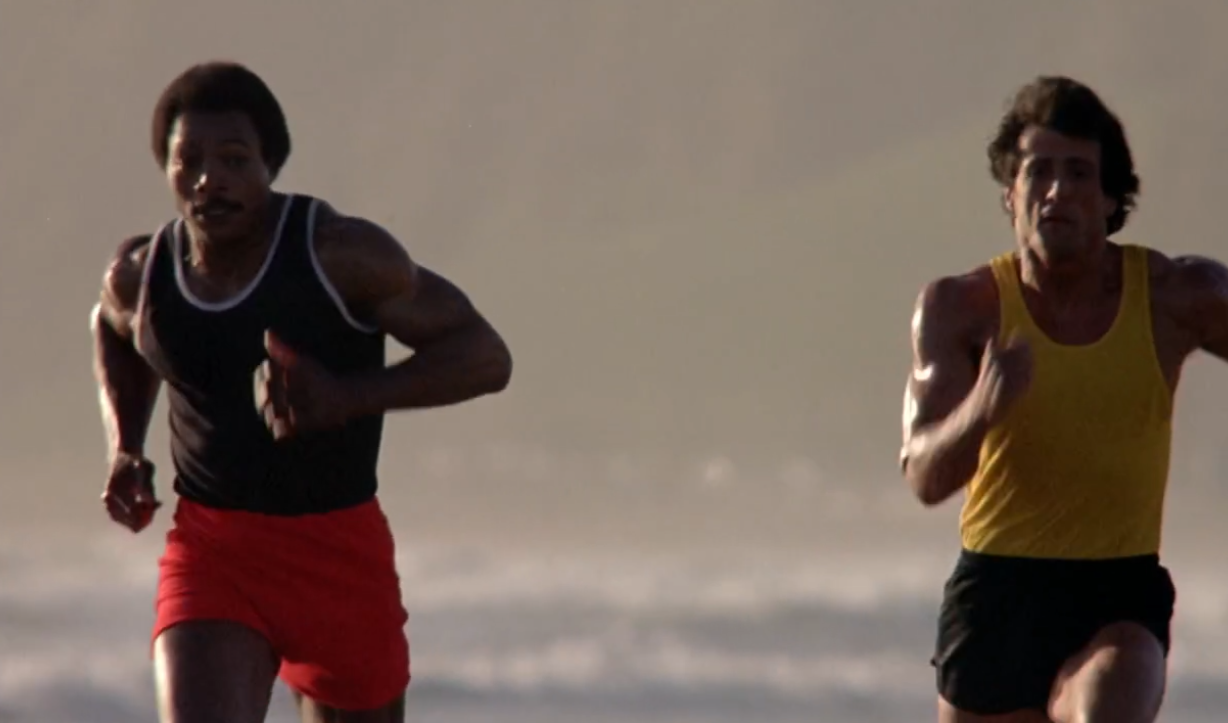
Peary’s right that there’s not much else to say about this innocuous third installment, other than that it’s good to see Weathers and Stallone teaming up:

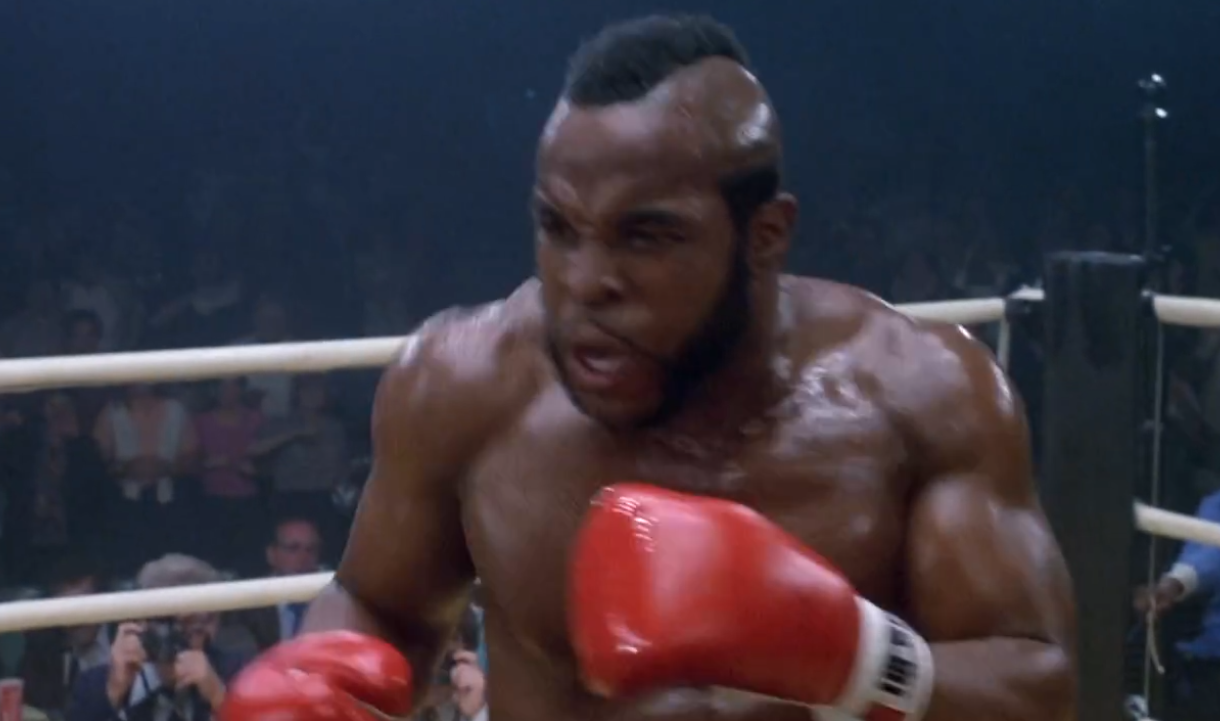
… it’s easy to see why Mr. T. got a TV deal:

… and there’s a silly early sequence in which Hulk Hogan appears to thoroughly thrash Stallone, only for Stallone to suddenly turn things around.


Notable Performances, Qualities, and Moments:

  • Bill Butler’s cinematography
  • Effective use of “Eye of the Tiger” by Survivor as a theme song

Must See?
No; skip this one unless you’re a Rocky fan.

Links:

Rocky II (1979)

Rocky II (1979)

“Why don’t you be smart and fight again?”

Synopsis:
When Rocky Balboa (Sylvester Stallone) struggles to provide for his new wife (Talia Shire) and son, he reconsiders engaging in a lucrative follow-up fight against heavyweight champion Apollo Creed (Carl Weathers).

Genres, Themes, Actors, and Directors:

  • Boxing
  • Burgess Meredith Films
  • Sylvester Stallone Films
  • Talia Shire Films

Response to Peary’s Review:
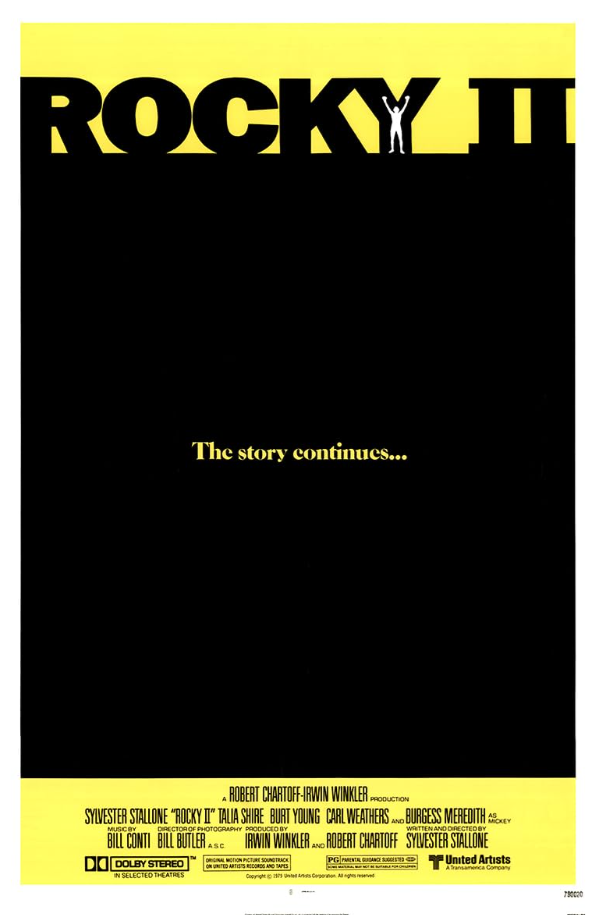
Peary writes that this sequel to Sylvester Stallone’s Oscar-winning 1976 blockbuster is “as shamelessly sentimental as both versions of The Champ.” He points out that the “exciting final bout is, of course, the film’s highlight” (it purportedly took over eight months to edit to Stallone’s satisfaction):

… but “what’s most interesting is the relationship between Rocky and Adrian… Although she still can’t bear to watch him fight, she becomes his partner (rare for a woman in a boxing film) and the person who gives him the necessary motivation to… make the most of his life.”

With that said, you’ll most definitely “have a hard time putting up with director-writer Stallone pulling your emotional strings by subjecting Adrian to a hemorrhage and lengthy deathbed stay, from which”

SPOILER

“she recovers because of Rocky’s prayers.”

Indeed, the flaws and limitations of Stallone’s writing style — not to mention his strong Christo-patriarchal leanings — are much more evident this time around, as he attempts to provide a framework for essentially re-offering the same movie with just a few twists; everything viewers loved about the first movie is brought back for a second run, including starting with its final fight scene. With that said, lovers of Rocky and his entourage will likely enjoy a chance to spend more time with them (and to experience his inevitable success after adversity) — but this film hasn’t held up well as an essential sequel on its own.

Notable Performances, Qualities, and Moments:

  • Bill Butler’s cinematography
  • Good use, once again, of Philadelphia locales
  • Bill Conti’s score

Must See?
No, but of course Rocky fans will want to check it out.

Links:

Rocky (1976)

Rocky (1976)

“All I wanna do is go the distance.”

Synopsis:
When an underdog boxer (Sylvester Stallone) in Philadelphia is given an opportunity to fight against a champion (Carl Weathers), he receives support from his new girlfriend (Talia Shire), Shire’s surly brother (Burt Young), and an aging local trainer (Burgess Meredith).

Genres, Themes, Actors, and Directors:

  • Boxing
  • Burgess Meredith Films
  • Sylvester Stallone Films
  • Talia Shire Films
  • Underdog

Response to Peary’s Review:
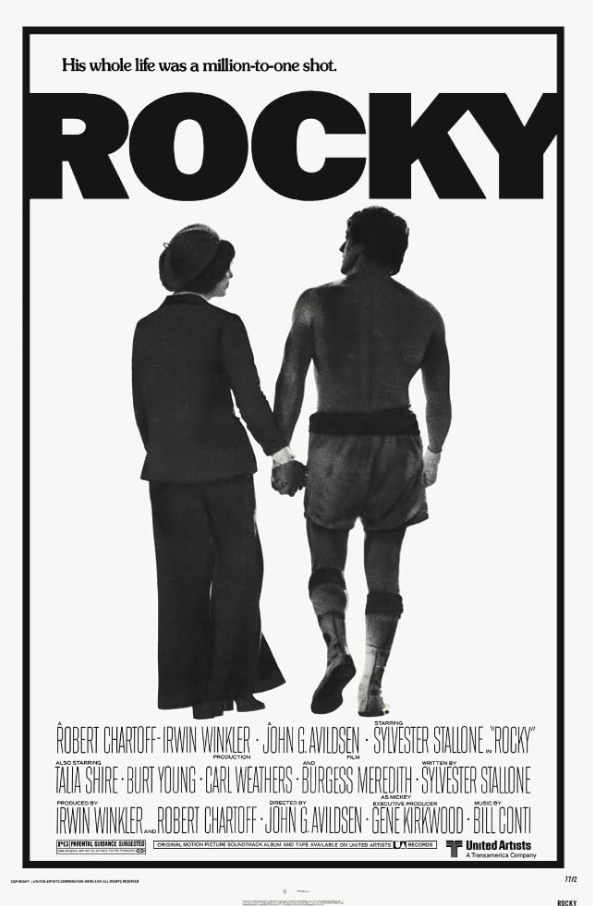
As Peary writes, “This disarming little sleeper” — “written by its unknown star Sylvester Stallone” — “smashed box-office records, won Oscars for Best Picture and Best Director (John G. Avildsen), made Stallone into an instant superstar, and gave the disenfranchised of America a new folk hero.”

He notes that while “we’ve overdosed on sequels” — Rocky II (1979), Rocky III (1982), and Rocky IV (1985) are all discussed in GFTFF — this original film “still holds up well and is guaranteed to produce cheers and tears” given that it shows an America in which “miracles do happen.” In describing the film’s first “Miracle,” Peary writes that Rocky’s courtship with “pretty but supershy Adrian (Talia Shire)” is “as touching as Paul Newman and Pier Angeli’s in Somebody Up There Likes Me” given that “they manage to build up each other’s self-respect, and soon they both realize that they aren’t losers.”

The second “Miracle” occurs when Rocky is “offered a shot at the heavyweight title” by an “overconfident champ” and “decides to go for it.” Although nobody up until then has given him a chance, he demonstrates that by training and simply showing up, he can “become a hero to everyone who wants to rise above loser status.”

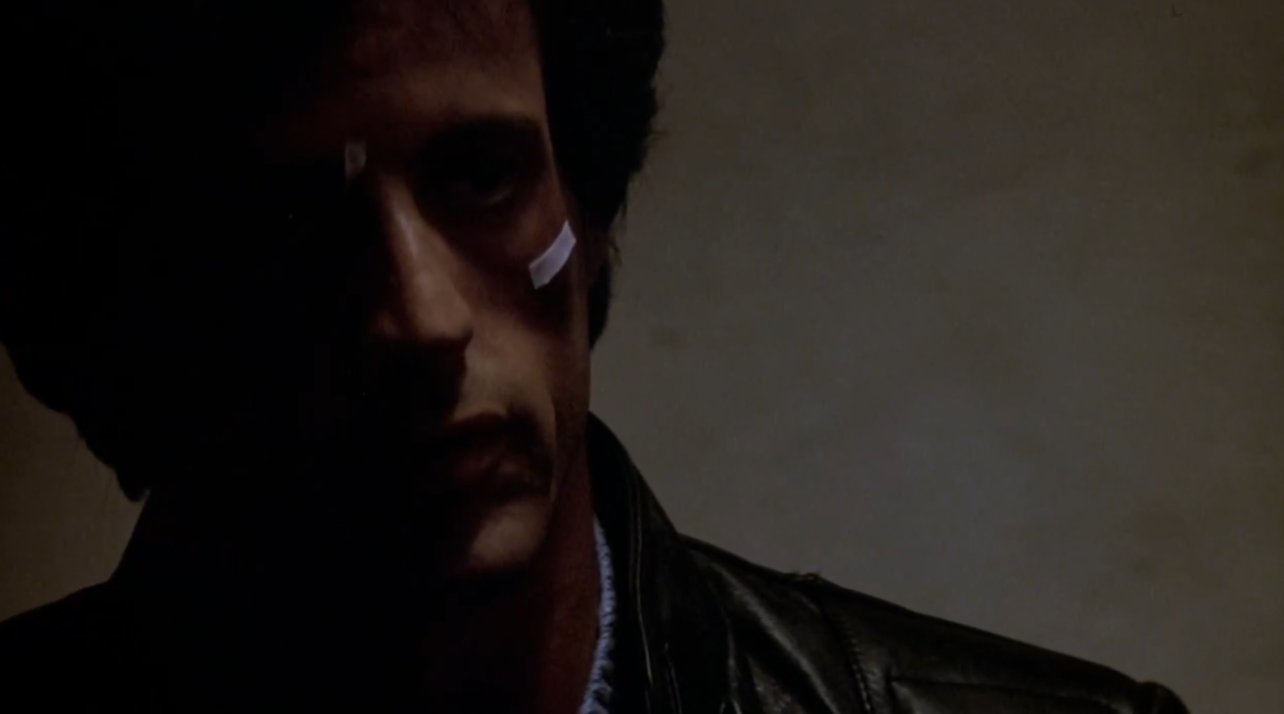
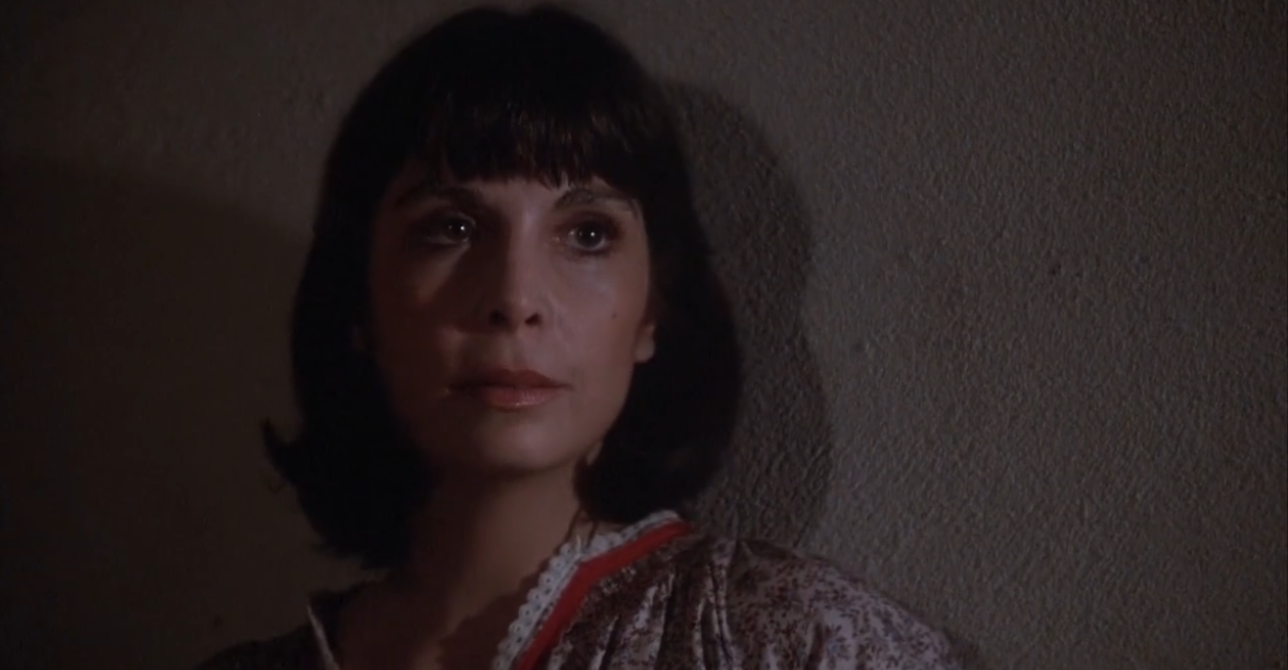
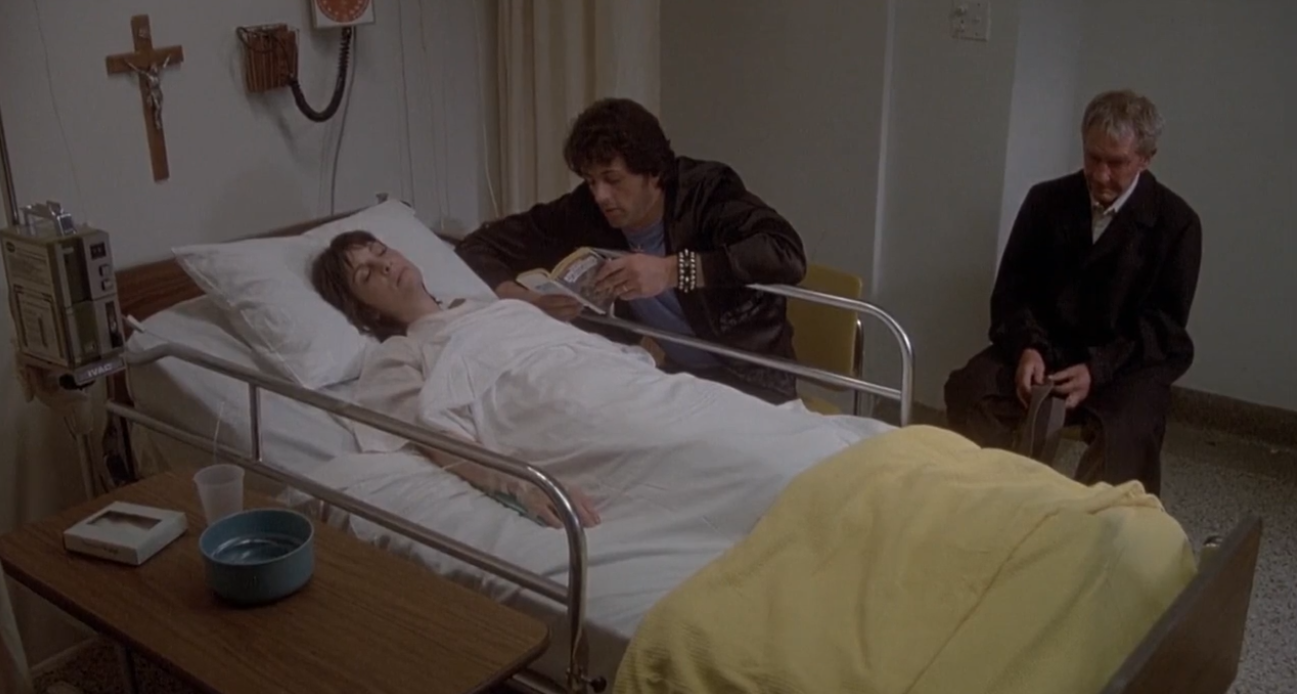
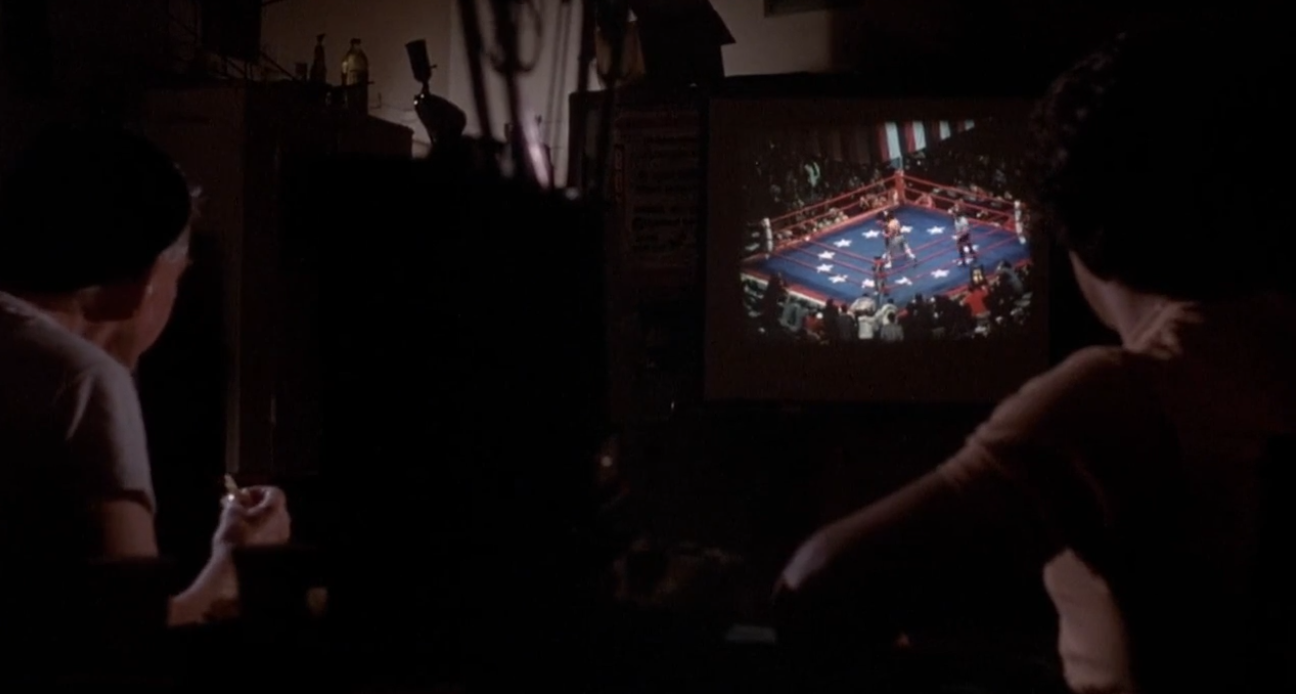
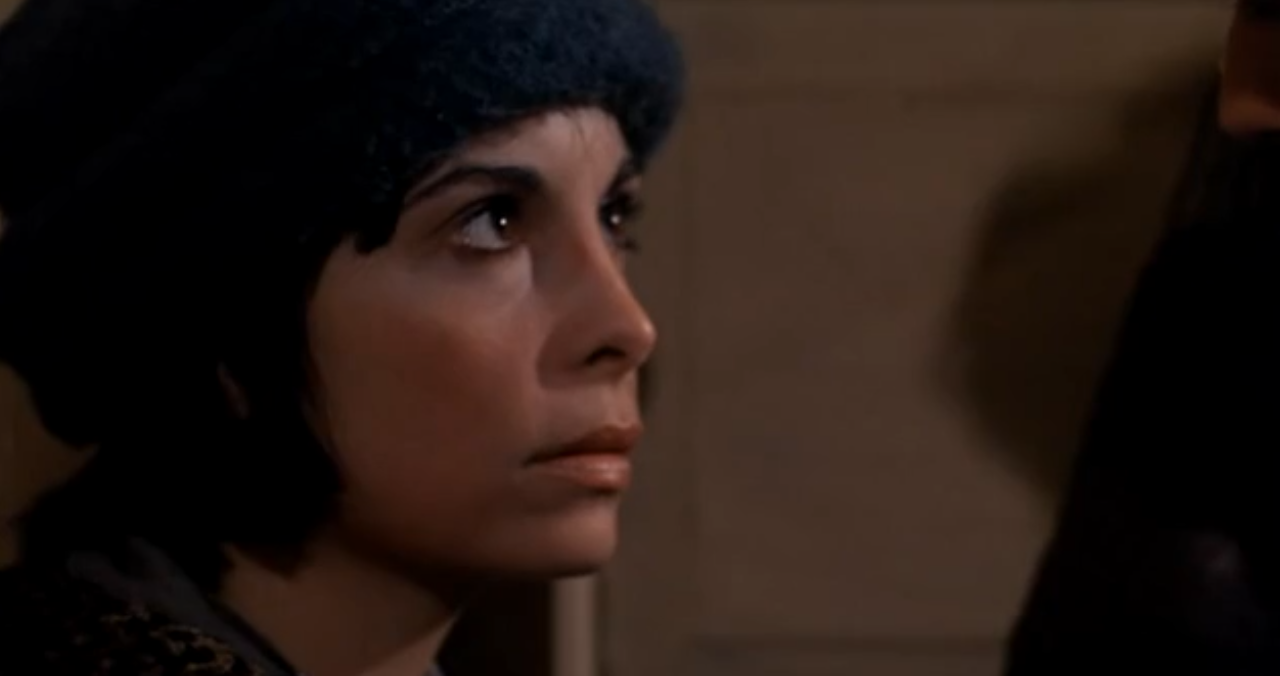
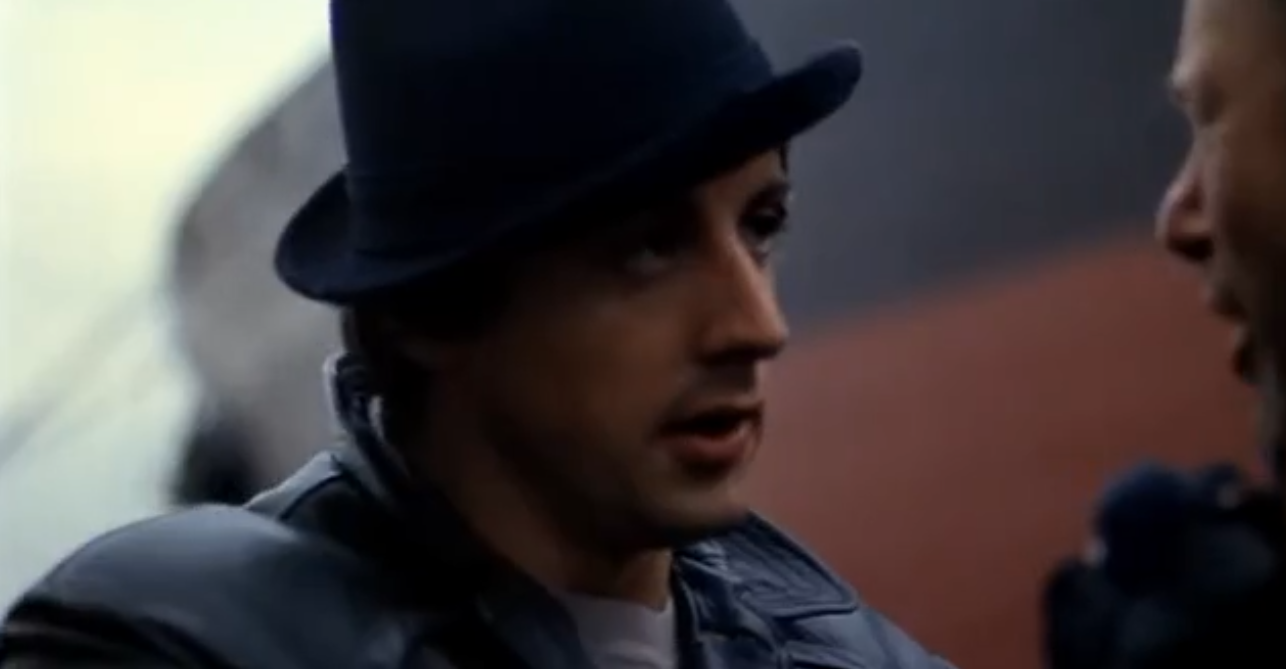
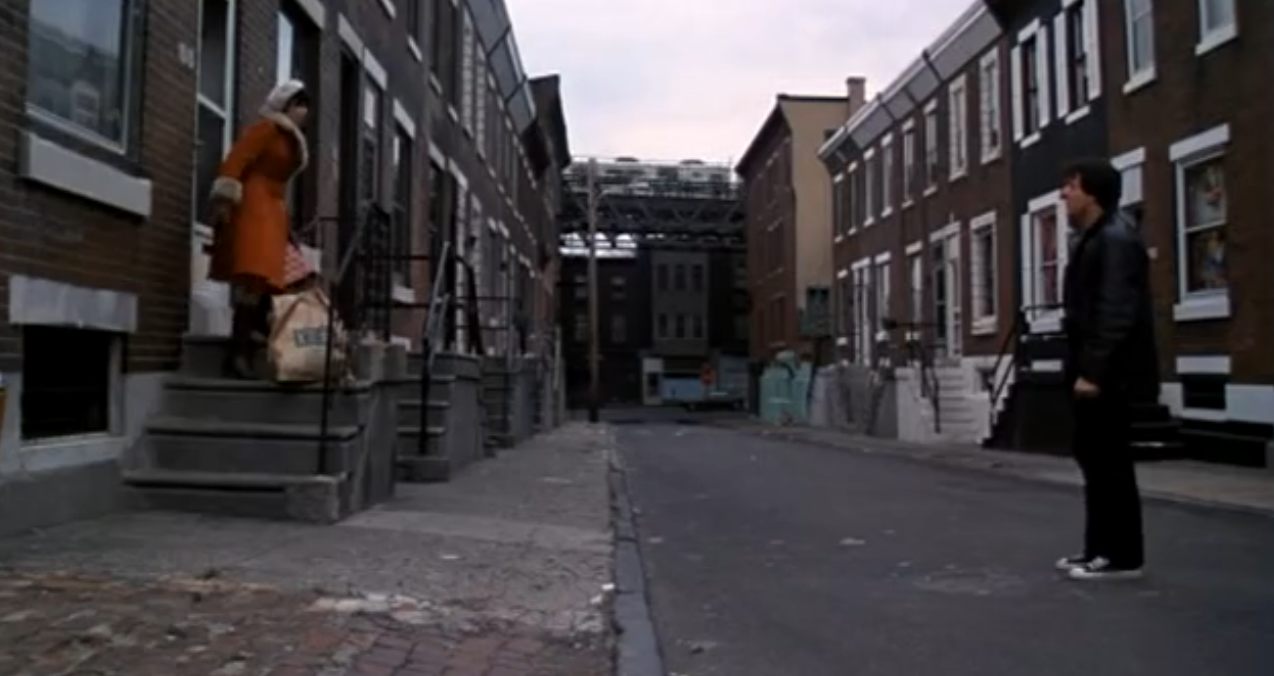
I’m about to critically revisit all the Rocky sequels (and will hold nothing back in my thoughts on them), but will concede for now that this original entry remains authentically heartwarming and contains many special, memorable moments — including Rocky chatting awkwardly with Adrian at the local pet store:

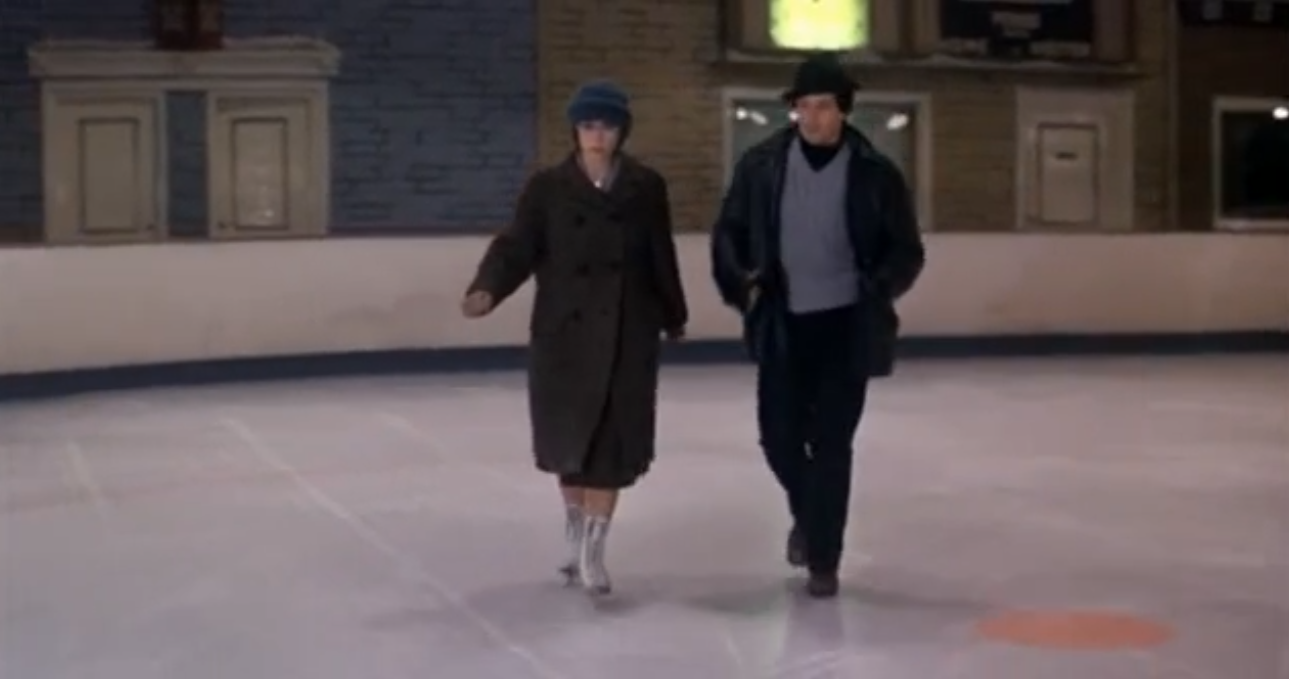
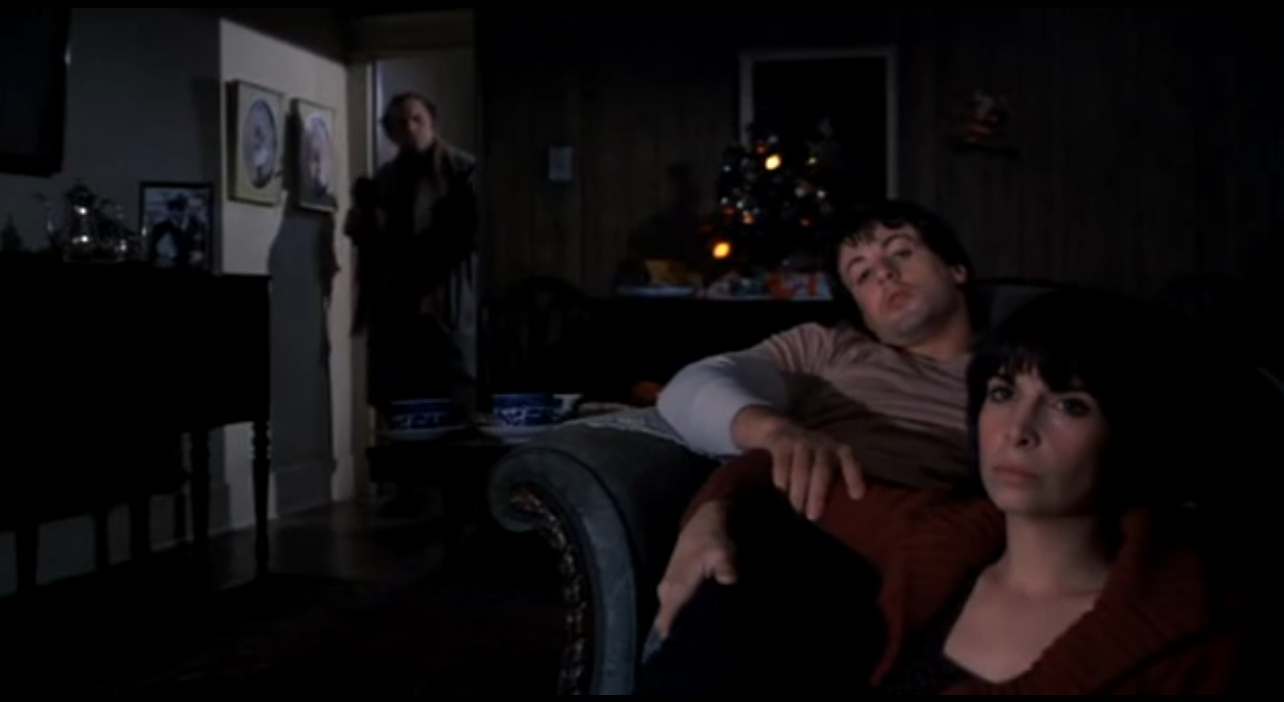
… Rocky and Adrian ice-skating in an empty rink on Thanksgiving while their high-cost ten minutes are counting down:

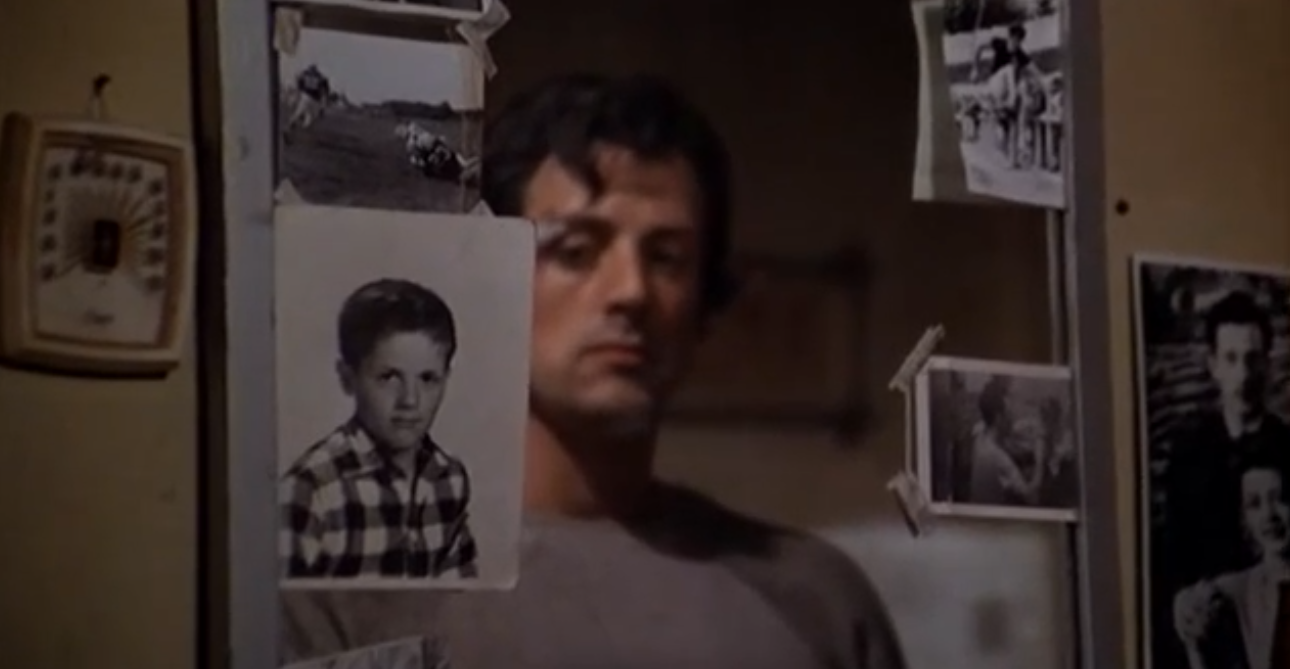
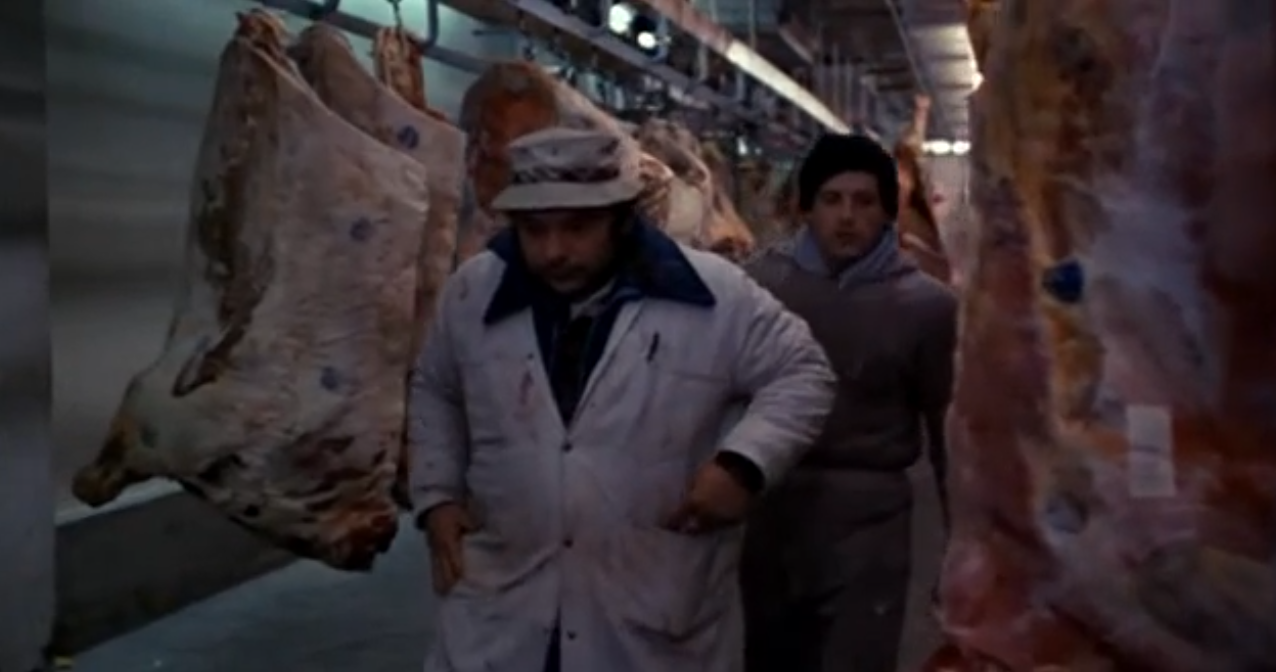
… Rocky wandering with Young through the aisles of a meat processing plant which will soon turn into a ready-made gym:

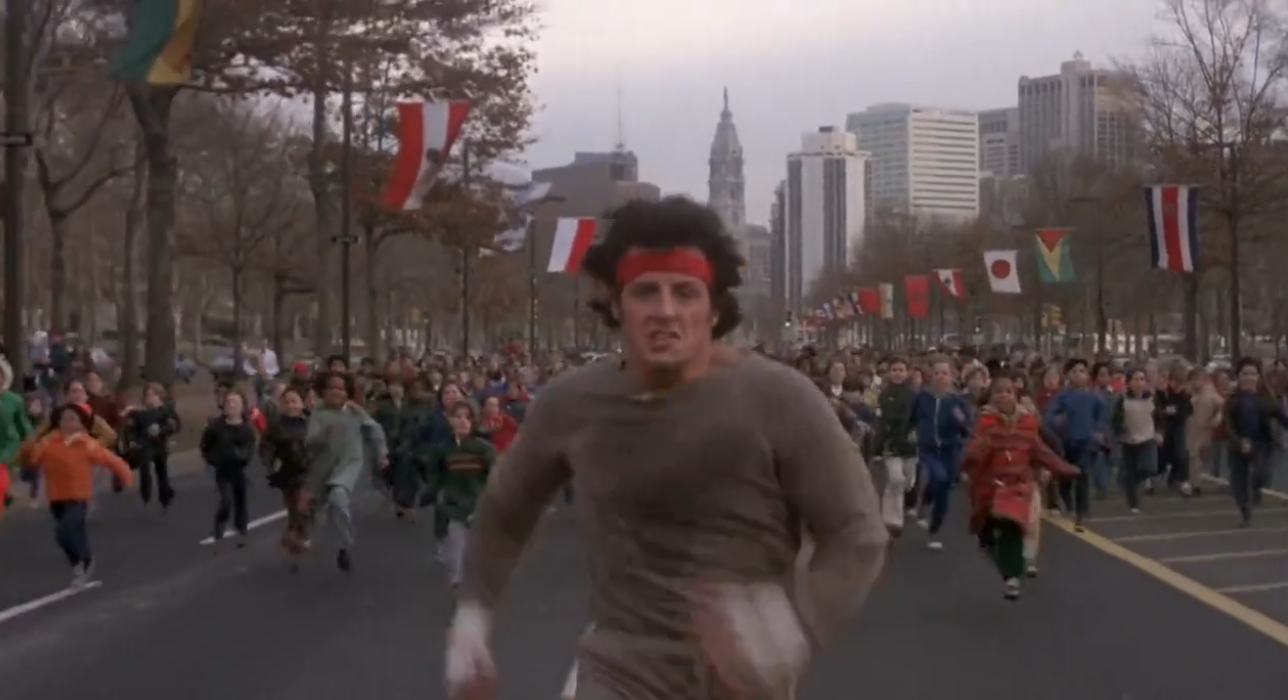
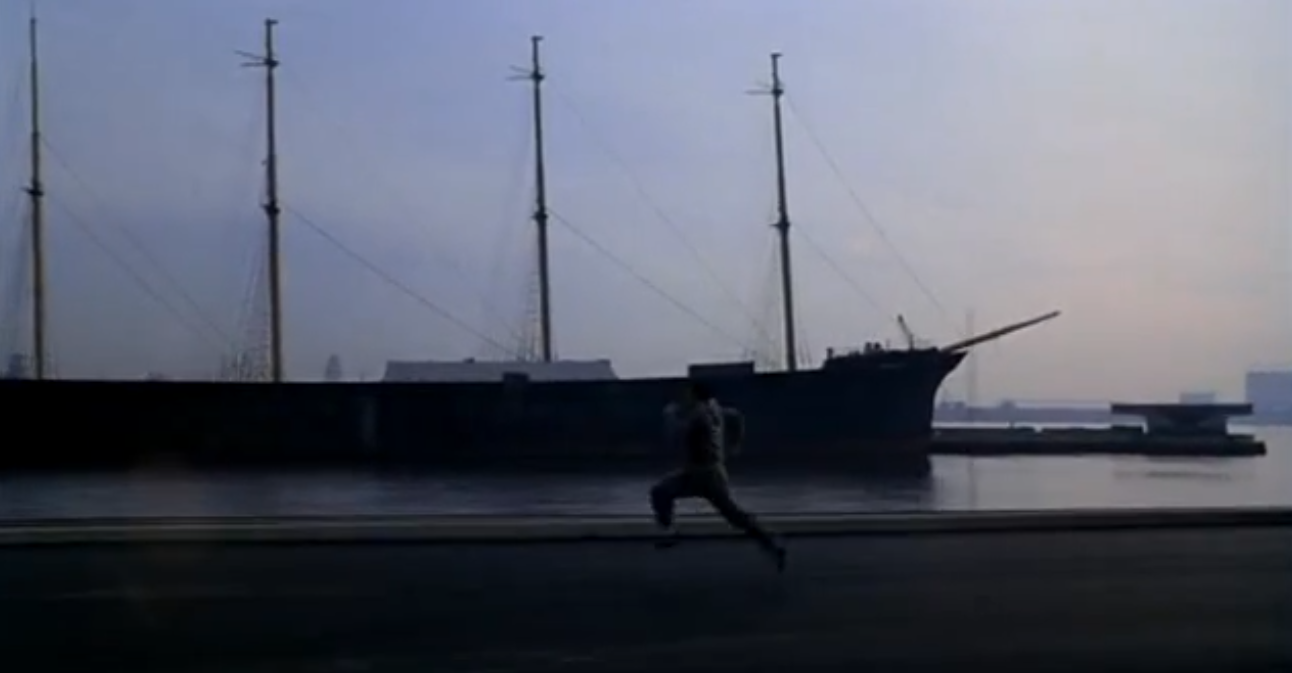
… and Rocky beginning his running regime along the streets of Philadelphia.

It’s well worth a revisit, and deserves its status as an underdog breakthrough film for Stallone.

Notable Performances, Qualities, and Moments:

  • Sylvester Stallone as Rocky Balboa
  • Fine supporting performances
  • James Crabe’s cinematography

  • Excellent use of authentic Philadelphia locales
  • Bill Conti’s score

Must See?
Yes, as an Oscar-winning classic.

Categories

  • Genuine Classic
  • Oscar Winner or Nominee

(Listed in 1001 Movies You Must See Before You Die)

Links:

Duck, You Sucker! / Fistful of Dynamite, A (1971)

Duck, You Sucker! / Fistful of Dynamite, A (1971)

“If I fall, they’ll have to alter all the maps.”

Synopsis:
When an Irish revolutionary (James Coburn) meets up with a Mexican bandit (Rod Steiger) during the time of Zapata and Pancho Villa, a complicated collaboration ensues.

Genres, Themes, Actors, and Directors:

  • Cat and Mouse
  • James Coburn Films
  • Mexico
  • Revolutionaries
  • Rod Steiger Films
  • Sergio Leone Films
  • Thieves and Criminals
  • Westerns

Review:
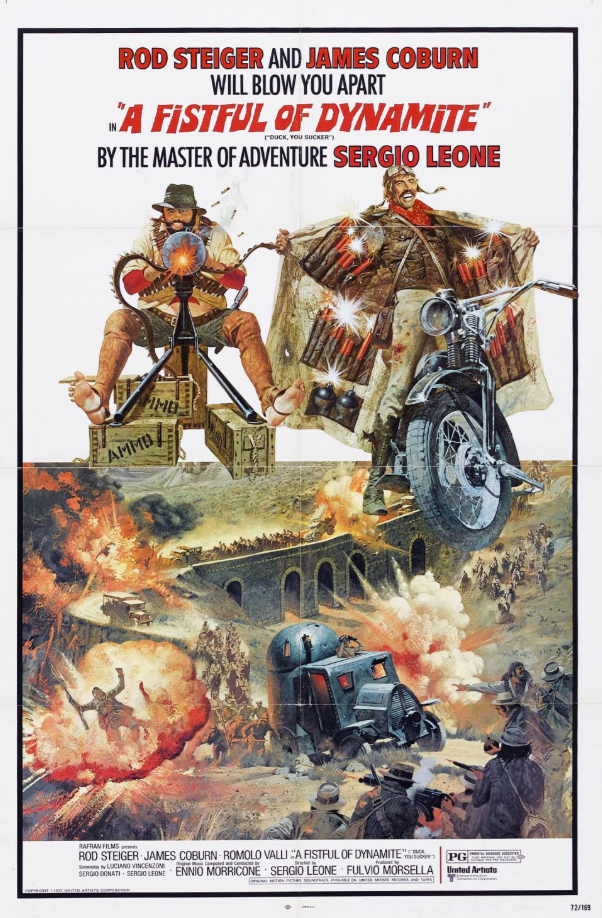
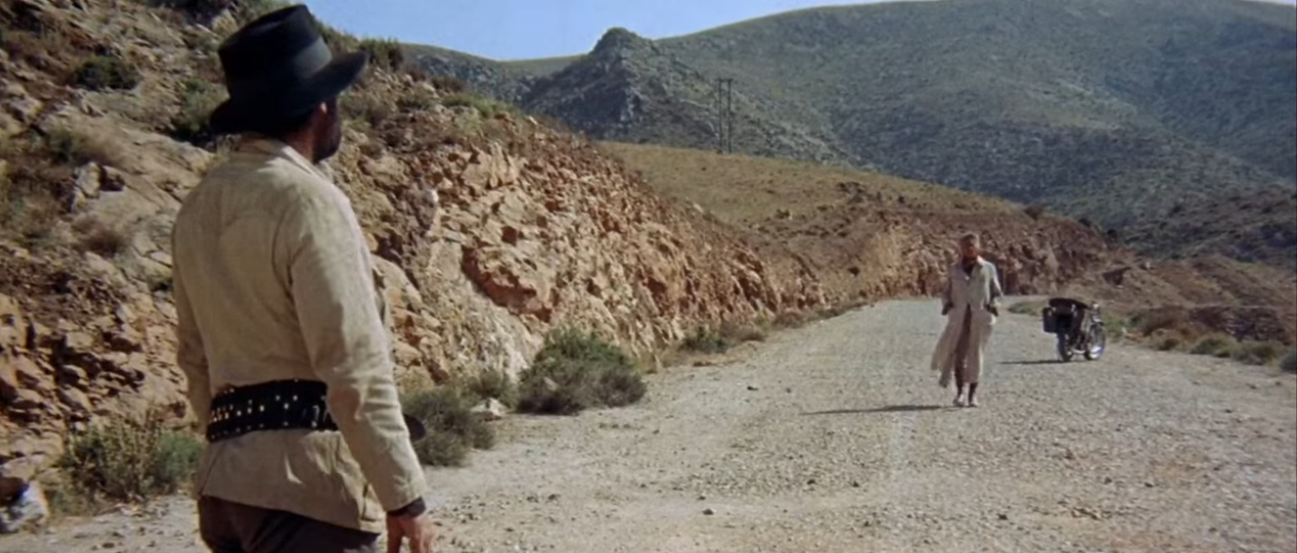
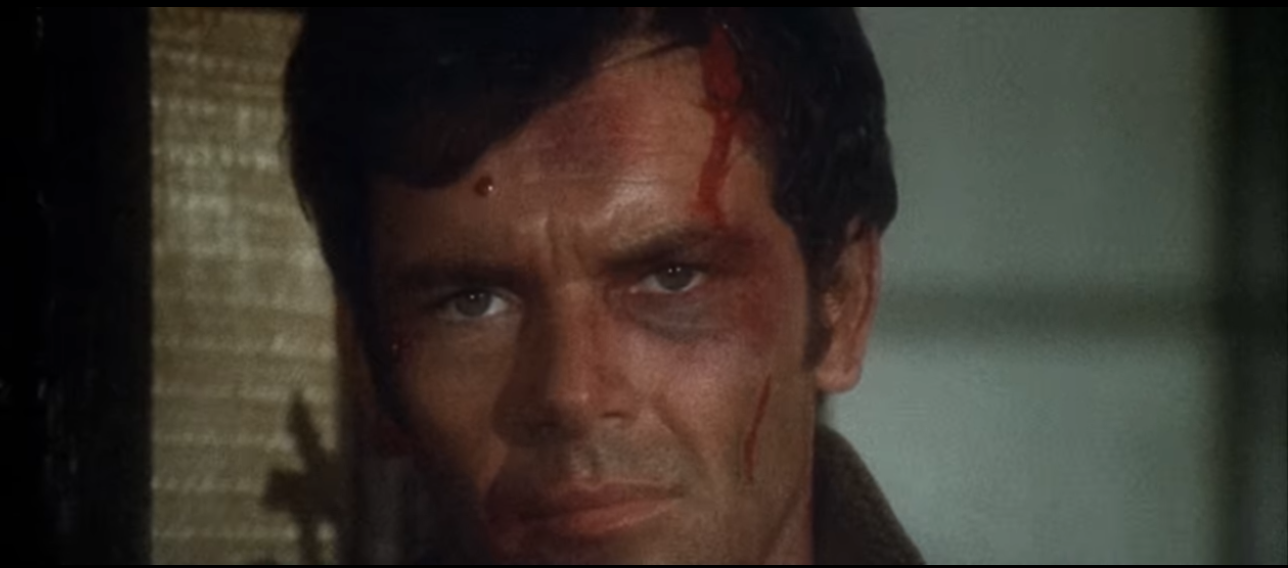
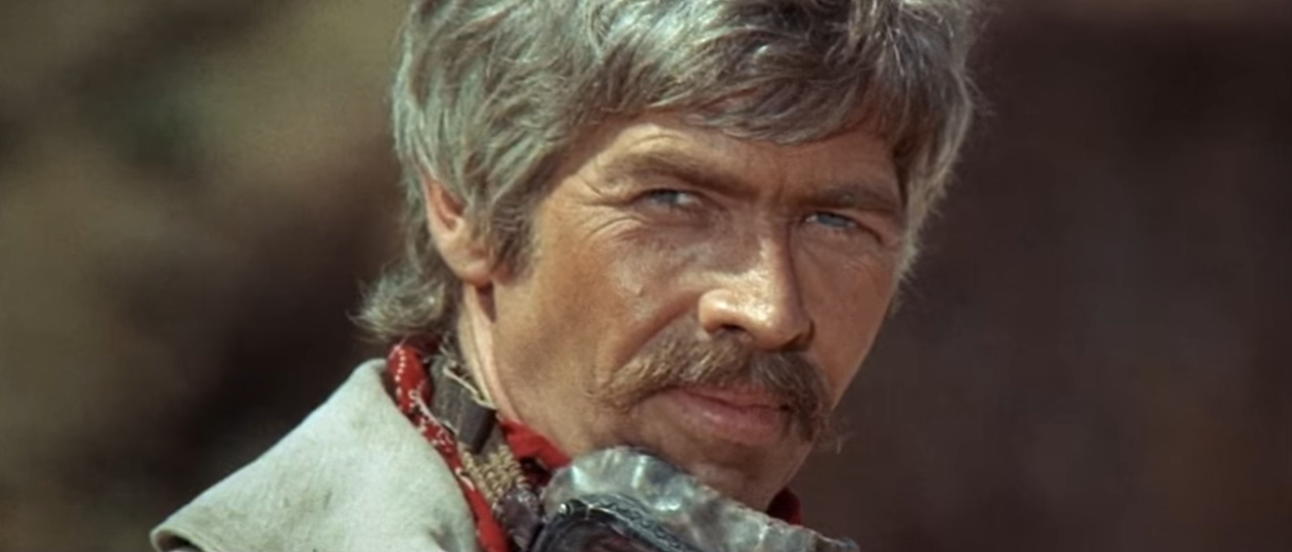
Sergio Leone’s follow-up to Once Upon a Time in the West (1968) — his sixth and penultimate film before Once Upon a Time in America (1984) — was this rambling operatic western about betrayal, values, explosives, and (marginally) revolution in early 20th century Mexico. At the heart of the narrative is the cat-and-mouse turned shakily-collaborative alliance between Coburn and Steiger, whose initial meeting on the road fills the enjoyable first half-hour of the film.

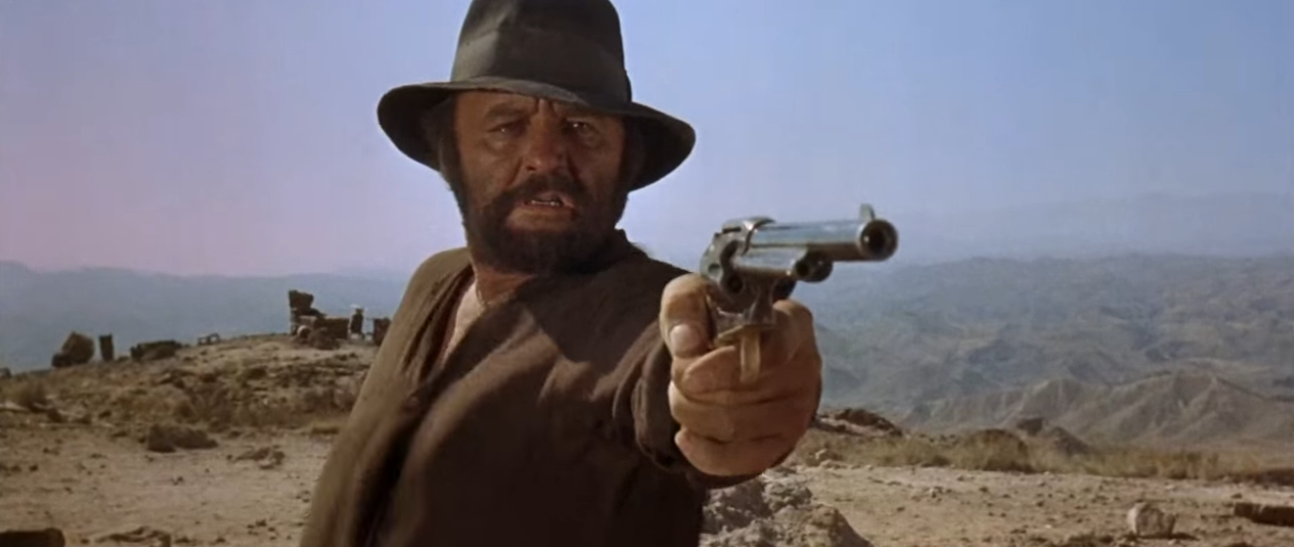
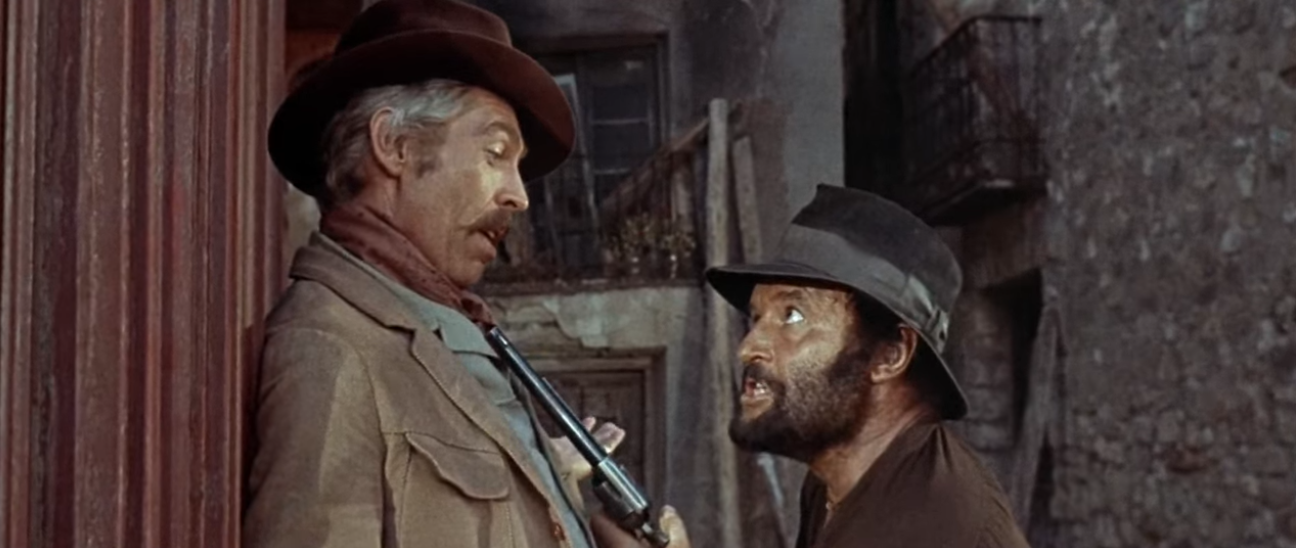
After this, we learn a bit more about Coburn’s previous involvement in the IRA and a love triangle through intentionally slow-paced (occasionally slo-mo) flash-back sequences:

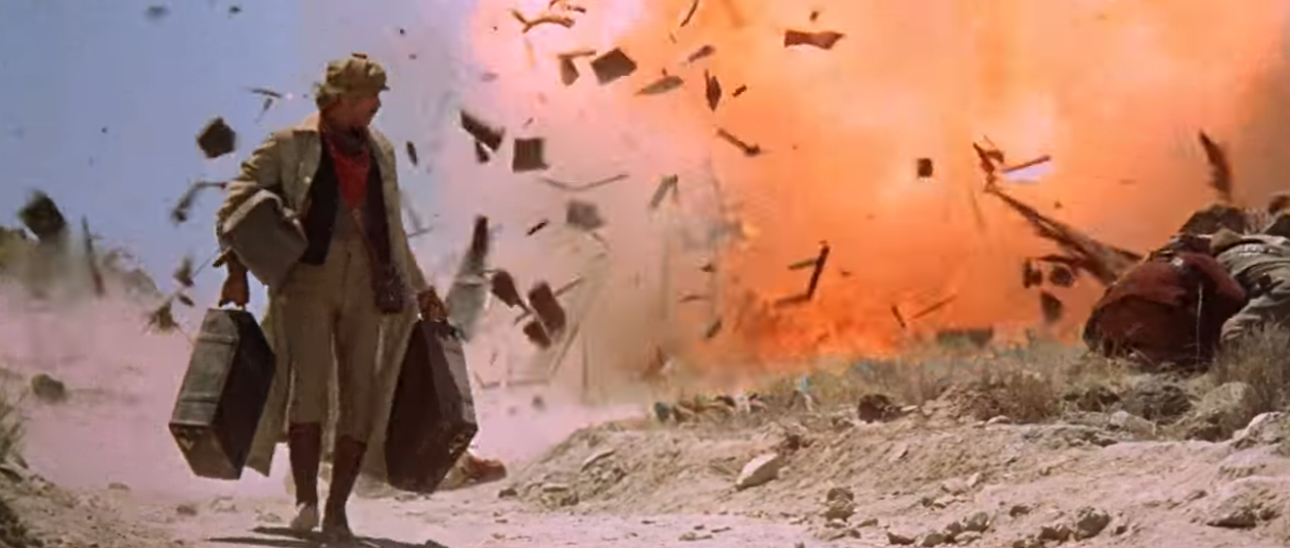
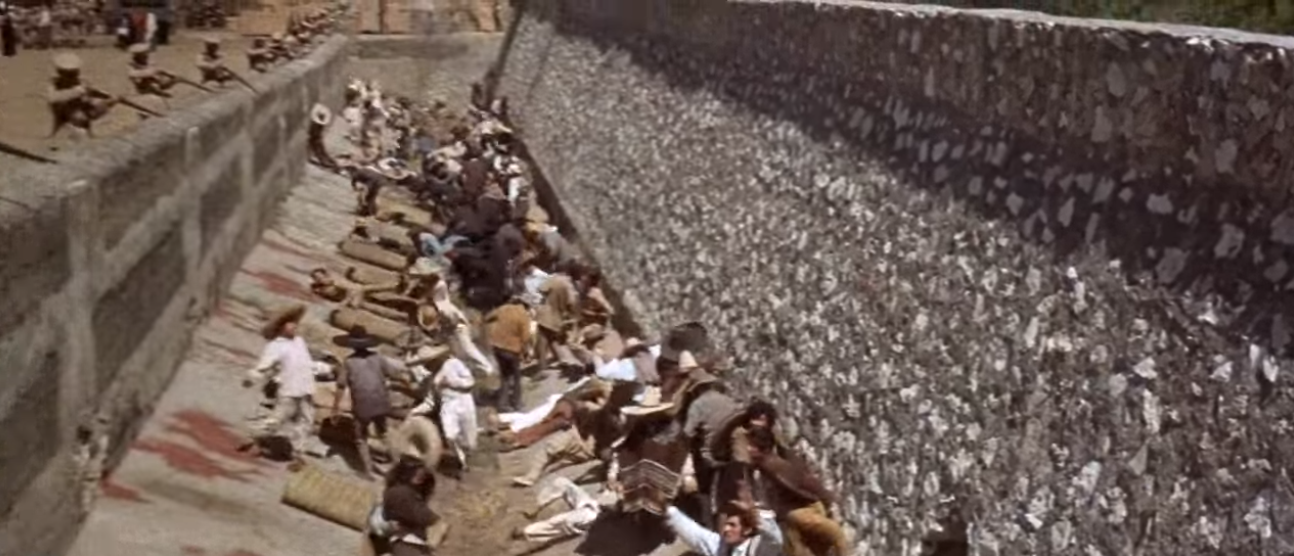
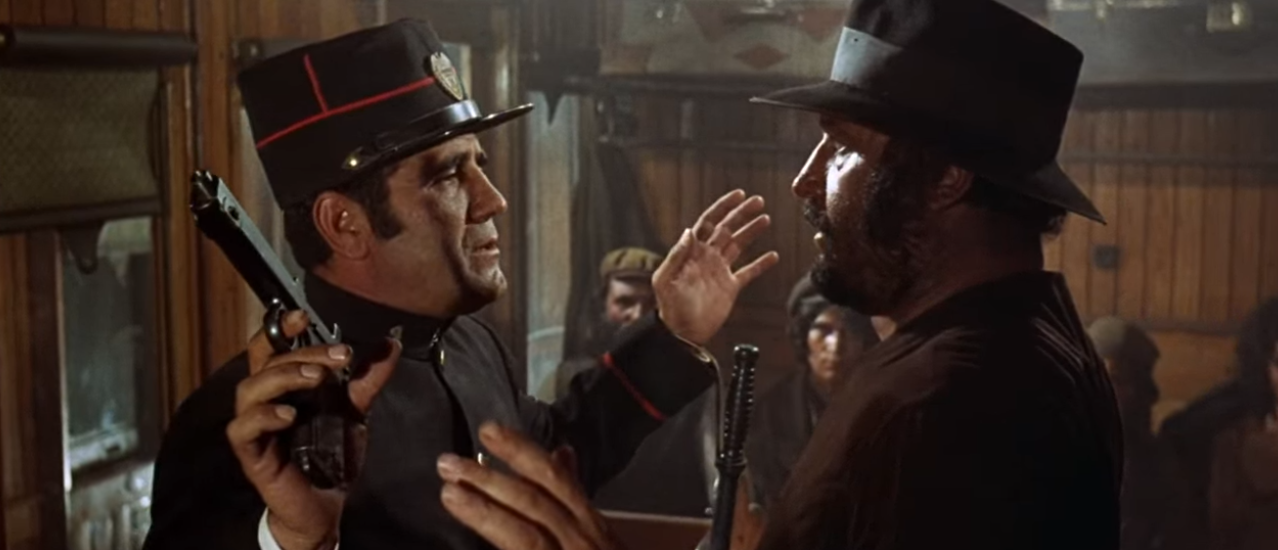
… and we see how Steiger and Coburn (playing characters named “Juan” and “Sean” respectively — both variations on “John”) come to realize their mutual respect for one another. Everything is beautifully filmed, with strategic framing, excellent use made of extras and expansive sets, an instantly jaunty score by Ennio Morricone, and many effectively set up scenes of explosions.

However, be forewarned that the storyline — intended to deglamorize revolution and reveal it as the violent, chaotic, corrupt mess it is (the film’s working title was Once Upon a Time… The Revolution) — goes on for too long and is challenging to follow at times. Leone fans won’t want to miss this one, but it’s not must-see for other film fanatics.

Notable Performances, Qualities, and Moments:

  • James Coburn as John (Sean) Mallory
  • Rod Steiger as Juan Miranda
  • Coburn and Steiger’s entertaining banter with one another
  • Giuseppe Ruzzolini’s cinematography
  • Masterful direction of both close-up and wide panning shots

  • Impressive sets and costumes
  • Ennio Morricone’s score

Must See?
No, but it’s recommended for fans of Leone. Listed as a Cult Movie and a Personal Recommendation in the back of Peary’s book.

Links: